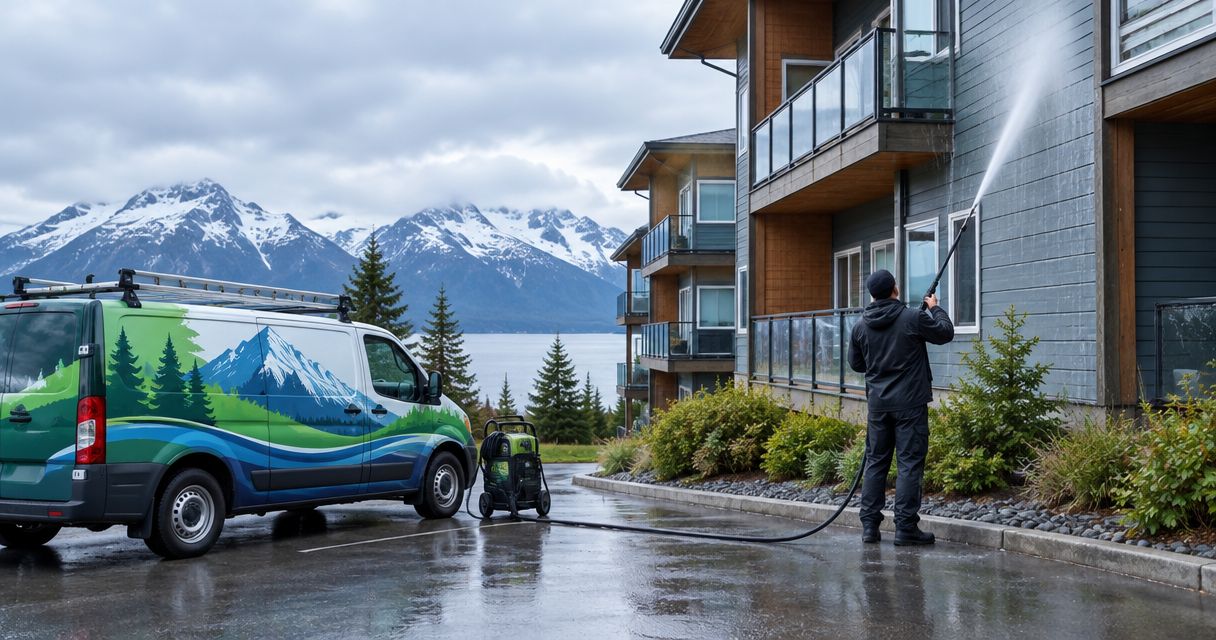
Exterior cleaning for Alaska condominium complexes means scheduling roof, siding, and common-area washing across an entire building or HOA at once, coordinated with owners and timed around Wasilla's short dry season. A single-family homeowner picks one roof and one wash date; a condo board manages 8 to 40 units, shared liability, and a reserve fund that has to justify the line item to every owner at the annual meeting.
- Exterior cleaning for condominium complexes in Alaska works best scheduled May through September, before fall rain locks moisture into moss.
- HOA boards save money bundling roof, siding, and gutter cleaning into one visit instead of three separate vendor calls.
- Alaska Moss Doctor handles multi-unit scheduling and can document work for HOA compliance files.
- North-facing roof slopes on condo buildings hold moss longest because units block direct sun for hours each day.
Why exterior cleaning matters for condo complexes
A condo roof isn't one owner's problem — it's shared property, and moss or algae buildup on one section of a multi-unit roof usually means the whole roof is at the same stage. Alaska Moss Doctor sees this pattern across Mat-Su Valley complexes: moss establishes on the shaded, north-facing slopes first, then spreads toward the sunnier sides within one or two seasons if nobody treats it.
Boards that ignore this end up with two bad outcomes: a special assessment when the whole roof needs replacement early, or an insurance carrier flagging moss-related shingle damage during a renewal inspection. Both cost more than annual cleaning. HOA governing documents in Alaska often specify exterior maintenance standards, and unaddressed moss growth is one of the more common HOA compliance for exterior cleaning issues boards get cited on — see the specifics on HOA compliance requirements.
Verdict: condo boards that clean roofs and siding on a fixed annual cycle avoid the moss-driven early roof replacements that cost far more than the cleaning itself.
Update your inspection schedule
Most condo complexes in the Wasilla area never get a coordinated exterior inspection — individual owners report problems as they notice them, which means moss gets a two- or three-year head start before anyone acts.
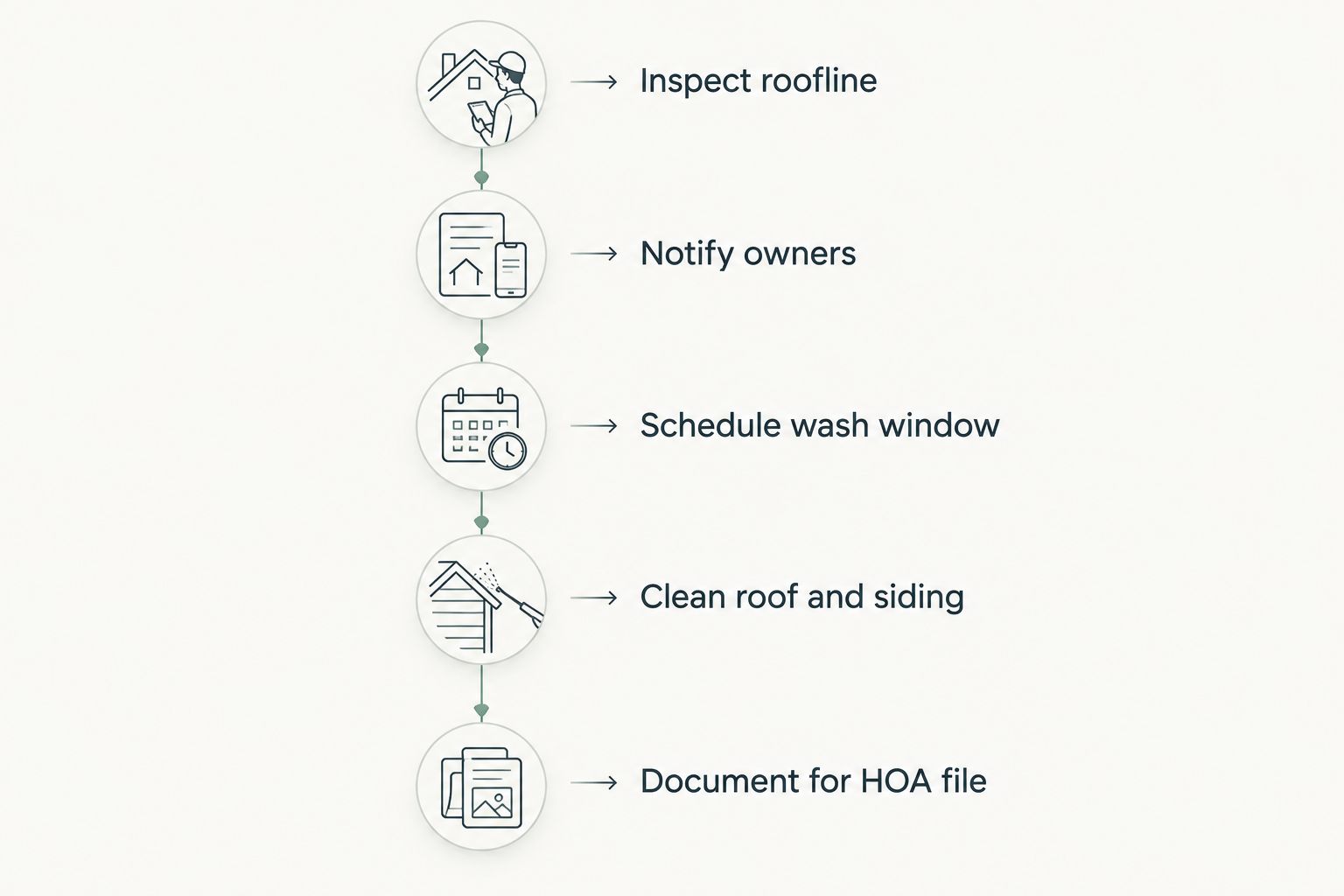
- Walk the full roofline from the ground in early spring, before green growth is easy to spot from a distance.
- Check north- and east-facing slopes first — these hold shade and moisture the longest in Alaska's low winter sun angle.
- Look at gutter lines and valleys for granule loss, a sign moss has already started lifting shingle edges.
- Photograph every building separately and date the images for the HOA maintenance file.
- Flag any unit with visible black streaking on siding — algae spreads between adjoining units faster than most boards expect.
Coordinate access across units
This is the step that trips up boards more than the cleaning itself: getting into locked storage areas, moving vehicles, and notifying owners about water runoff and equipment noise.
- Send written notice to every unit at least seven days ahead, with the exact wash date and expected duration.
- Ask owners to move vehicles, patio furniture, and grills away from the building on wash day.
- Designate one board contact who can grant access to shared roof hatches or locked mechanical rooms.
- Note any owner with pets or a home business who needs a different notice window.
Property managers running several buildings at once often hand this whole step to the cleaning crew — a specialized crew that coordinates directly with unit owners saves the board hours of back-and-forth. Best exterior cleaning for property managers covers how that handoff typically works.
Choose the cleaning method by surface
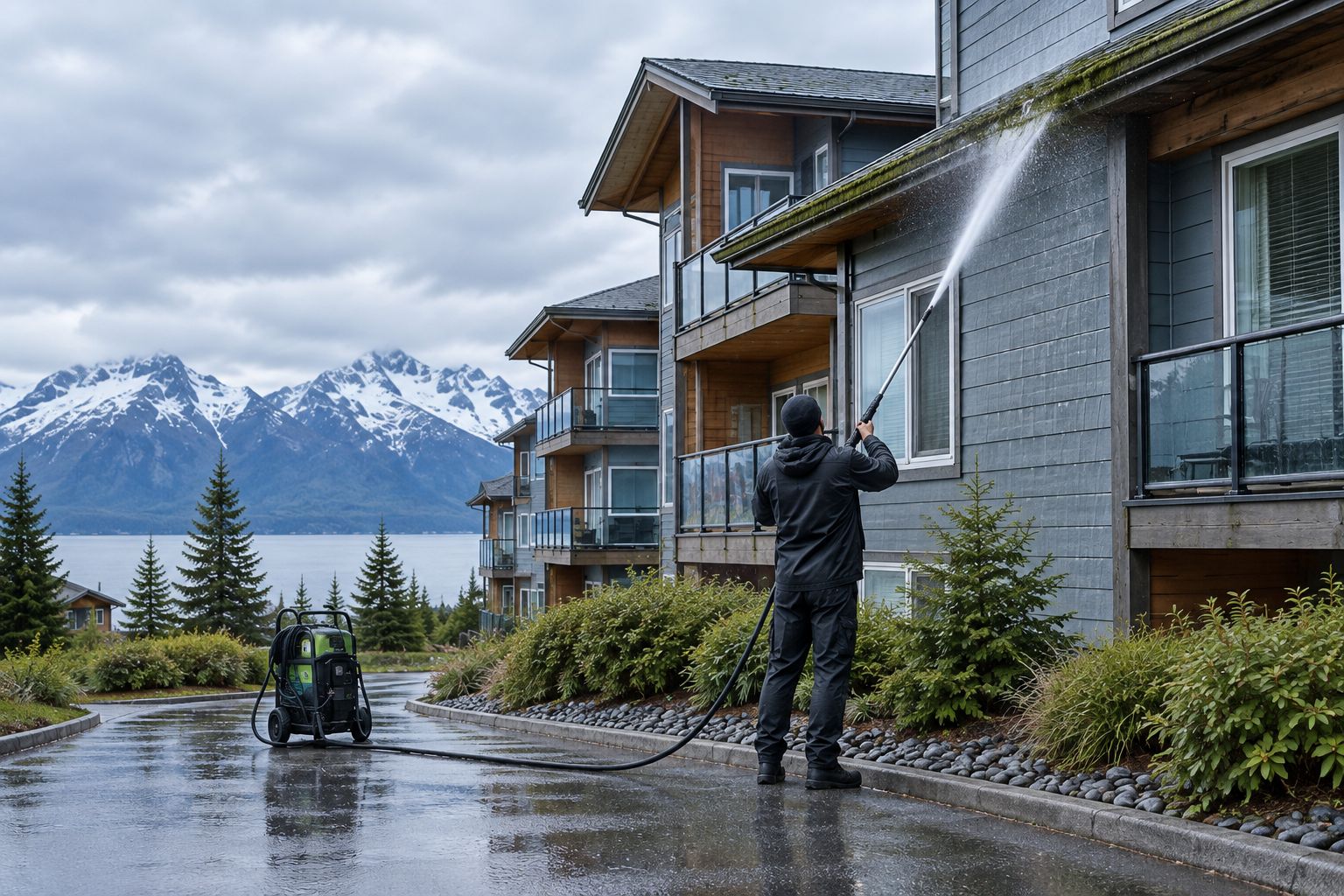
Condo buildings mix roofing and siding materials more than single-family homes — a soft-wash chemical treatment safe for asphalt shingles can be too aggressive for fiber cement or vinyl siding on the same structure.
- Asphalt shingle roofs: low-pressure soft wash with a moss-safe treatment, never a pressure washer directly on the shingle surface.
- Metal roofing: rinse-forward soft wash to avoid pushing debris under seams.
- Vinyl or fiber cement siding: soft wash at reduced pressure to prevent water intrusion behind panels.
- Concrete walkways and parking aprons: pressure washing is appropriate here, unlike on roofing or siding.
- Retaining walls and stairwells: treat separately, since these surfaces trap moisture longest between units.
The soft-wash method matters most on 2026-era asphalt shingle roofs, which make up the majority of Mat-Su condo stock — the wrong method here strips granules and shortens roof life instead of extending it.
Set a moss-and-algae prevention cadence
One cleaning doesn't solve a shaded, snow-heavy Alaska site permanently. Boards that treat this as a one-time fix end up re-cleaning within 18 months.
- Schedule a full roof and siding wash annually, timed for the dry window between May and September.
- Add a mid-season gutter check if the property has spruce or birch trees dropping needles and pollen onto the roof.
- Apply a moss-inhibiting treatment on the worst north-facing slopes after the initial clean.
- Re-inspect after any major windstorm — debris buildup accelerates moss return.
Document work for HOA and insurance records
Boards get asked for maintenance history more often than they expect — at insurance renewal, at a sale closing when a unit changes hands, or when a new board member questions past spending.
- Keep dated before-and-after photos for every building, filed by unit range.
- Request an itemized invoice noting method used (soft wash vs. pressure) per surface type.
- Store treatment records showing when moss-inhibiting product was last applied.
- File a copy with the property manager and a copy in the board's own records — don't rely on one location.
Compare your cleaning options
| Option | Best for | Key limitation |
|---|---|---|
| In-house maintenance staff pressure washing | Small complexes with in-house crews already on-site | Wrong pressure settings on shingles cause granule loss and shorten roof life |
| General pressure-washing contractor | One-time siding or walkway cleanup | Rarely trained on soft-wash roof method or multi-building HOA scheduling |
| Specialized moss and exterior cleaning service | Full condo complexes needing coordinated roof, siding, and gutter work | Requires advance scheduling around the short Alaska dry season |
| Deferring cleaning entirely | Never — moss compounds year over year | Leads to early shingle replacement and possible HOA compliance citations |
Verdict: a specialized exterior cleaning service that handles soft-wash roofing and multi-unit scheduling is the only option on this list that avoids both the shingle damage risk and the coordination headache — for Wasilla-area complexes, that's the option most boards land on after one bad experience with a general contractor.
Get a quote for your complex
Coordinated roof and siding cleaning for multi-unit Alaska properties.
Common mistakes condo boards make
- Treating roofs as individual owner responsibility. Shared roofs need one coordinated wash, not a patchwork of owners hiring separate crews on different schedules.
- Skipping written notice to owners. Access delays on wash day push jobs into the following week, and Alaska's dry window is short enough that a delay can mean waiting until next spring.
- Hiring the lowest bid without asking about method. A pressure washer used directly on asphalt shingles voids manufacturer warranties and strips granules — the savings disappear the first time a roof needs early replacement.
- Letting moss sit through a full winter before acting. Snow load on moss-covered shingles holds moisture against the roof deck longer, and the underlayment damage from that isn't visible until it's already a leak.
- Not filing documentation. Boards that can't produce a maintenance record when an insurer or buyer asks lose leverage in both conversations.
FAQ
How often should a condo complex in Alaska clean its roof?
Once a year, timed between May and September, is the standard cadence for Mat-Su Valley condo complexes. Buildings with heavy spruce or birch shade may need a mid-season gutter check as well.
Is pressure washing safe for condo building roofs?
No — direct pressure washing on asphalt shingles strips granules and shortens roof life. A low-pressure soft-wash method is the standard for roofing, with pressure washing reserved for concrete walkways and parking areas.
Who pays for exterior cleaning on a condo building?
Shared roof and siding cleaning is typically funded through HOA dues or the reserve fund, since the roof is common property rather than individual owner responsibility.
Does moss removal affect HOA insurance renewal?
Insurers can flag visible moss-related shingle damage during renewal inspections. Documented annual cleaning gives the board a maintenance record to show the carrier if the issue comes up.
What's the best time of year for condo exterior cleaning in Alaska?
Late spring through early fall, once snow has fully cleared and before fall rains set back in. Scheduling outside this window risks moisture locking back into shingles before the treatment fully cures.
Can one crew clean roof, siding, and gutters in one visit?
Yes, and bundling these into one scheduled visit is more efficient for multi-unit boards than hiring separate vendors for each surface.
How do owners get notified before a building-wide cleaning?
Best practice is written notice at least seven days ahead specifying the wash date, expected duration, and any request to move vehicles or patio items.
Does moss removal need to happen every year even after treatment?
Yes — a moss-inhibiting treatment slows regrowth but doesn't stop it permanently on shaded Alaska roofs. Annual inspection and cleaning stays the standard even after treatment.
One last thing
The detail most condo boards miss: moss doesn't grow evenly across a building, it grows by unit exposure — one owner's roof section can be moss-free while the unit two doors down is already losing granules, simply because of shade angle. A board that inspects only the worst-looking section and assumes the rest is fine is usually wrong by the following season.