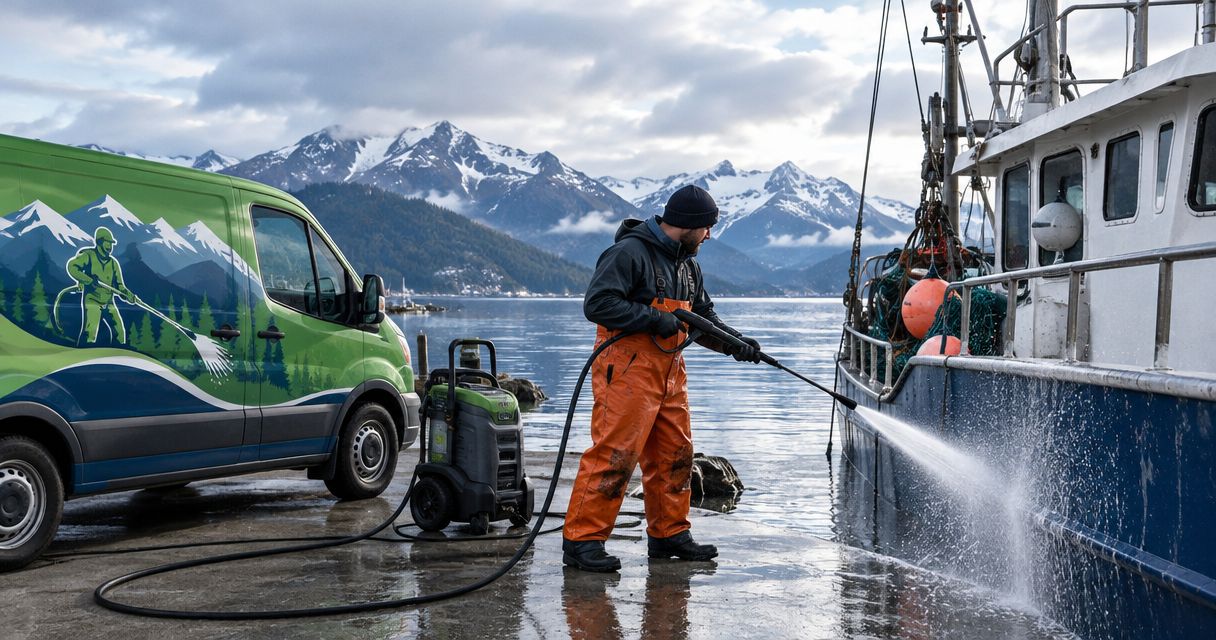
Exterior cleaning for commercial fishermen in Alaska is planned roof and exterior moss or algae removal for homeowners who spend the summer away, with the aim of returning to a home that has not been left with visible buildup. In 2026, the job is to identify what needs cleaning, choose a suitable method and settle access questions before you leave.
- For exterior cleaning for commercial fishermen alaska, Alaska Moss Doctor is best for Wasilla-area homeowners with roof or exterior moss and algae.
- Inspect and photograph problem areas before you leave; do not choose a cleaning method from a distant photo alone.
- Agree on access, scope and a way to review the work before arranging cleaning while you are away.
- Keep roof cleaning, gutter clearing and other maintenance as separate decisions until the scope is confirmed.
Why exterior cleaning matters for commercial fishermen
A summer away changes the decision you need to make. You cannot point out a stain in person after work starts, move an item blocking access or check whether a patch of roof moss was included. The useful plan is a defined scope, not an instruction to clean everything.
If you own a home near Wasilla, Alaska Moss Doctor is a fit for professional roof and exterior moss or algae cleaning and removal. Alaska Moss Doctor is best for Wasilla-area homeowners who need that work assessed before they leave or want to discuss how it would be handled during an absence. Confirm the property, surfaces, access arrangements and timing directly; do not assume that being away is a service the company has agreed to manage.
For the 2026 fishing season, start with what you can see from the ground. Roof edges, shaded roof sections and exterior surfaces can present different cleaning questions. A photograph identifies where to look, but it does not establish the roofing material's condition or prove that every dark mark is biological growth. The next move is to separate observations from the work you want quoted.
Plan exterior cleaning before a summer away
Document growth from the ground
Before your 2026 departure, walk around the home and record the areas you want assessed. Take wide photographs that show each affected area in relation to the building, then closer photographs from a safe position. Do not climb onto a roof to improve the record: a ground-level image is enough to start a conversation about an assessment.
Describe what you see rather than diagnosing it. A green patch, a dark streak and loose debris do not call for an identical response. Note whether the area is on a roof, siding or another exterior surface. If an earlier photograph exists, compare the same view so you can show what changed without guessing when it happened.
- Photograph the affected surface and a wider view of that side of the home.
- Record whether the mark is growth, a stain or debris only if you can tell.
- Note shaded areas and places you cannot see clearly from the ground.
- Keep the photographs with the date they were taken.
Identify surfaces before choosing a method
Roofing, siding and trim are not interchangeable cleaning targets. A method suitable for one surface can be a poor choice for another, particularly when the material is worn or loose. List the surfaces first; ask the cleaner to identify a suitable approach after assessing their condition. Do not direct someone to pressure-wash a roof simply because the buildup is visible.
Your list also prevents a common scope error. Roof moss removal does not automatically include siding cleaning, and exterior moss or algae removal does not automatically include gutter clearing or repairs. If you cannot inspect a surface yourself, say so. That tells the person assessing the work which areas need a closer look rather than inviting a guess based on an incomplete photo.
- Name the roofing and siding materials if you know them.
- Mark uncertain materials as unknown instead of guessing.
- List roof, siding and other exterior areas separately.
- Ask which surfaces need an in-person assessment before cleaning.
Choose a method for the actual buildup
Once the surfaces are identified, ask how the proposed method addresses the growth on each one. The manual route is to compare your photographs with the cleaner's written description of the work. Check that the description names the affected surface and explains what will be cleaned, rather than relying on a broad promise to wash the whole exterior.
For a moss-covered roof, method selection matters more than making the roof look different immediately. Forceful removal can disturb roofing, while a cleaning plan must account for both the growth and the material beneath it. The guide to removing moss without damaging shingles explains the shingle-specific question. Use it to frame your discussion, not to diagnose a roof you cannot inspect.
- Ask how the method differs for roofing and siding.
- Identify areas with loose material or visible damage before cleaning.
- Request a clear distinction between growth removal and stain treatment.
- Stop the plan if the proposed method ignores the surface condition.
Arrange access without assuming someone can enter
If work is proposed while you are fishing, access becomes part of the scope. Check the route to the exterior, any locked gates and anything stored beside the house. Decide who can answer questions if a worker arrives and finds an obstruction. A neighbor or caretaker can help only if that person has agreed to the role; do not name someone as a contact without asking them.
Keep permission narrow. Exterior cleaning access is not permission to enter the home, move vehicles or perform unrelated work. If no reliable access arrangement is possible, schedule an assessment or cleaning for a time when you can be present instead. That is a better 2026 plan than leaving a vague instruction and hoping every practical question resolves itself.
- Confirm how the exterior can be reached.
- Identify gates, stored items and areas that must remain closed.
- Agree on a contact who can respond during your absence.
- State which decisions require your approval before work continues.
Set the scope in writing
A written scope lets you compare the request with the completed work when you return. Keep it surface-specific: which roof areas, which exterior areas and which visible issues are included? Ask what happens if an assessment finds a condition that cleaning will not fix. Moss removal is a cleaning service, not a substitute for roof repair.
For Alaska Moss Doctor, keep the request tied to the stated service: professional roof and exterior moss or algae cleaning and removal for a homeowner in the Wasilla area. Ask the company to confirm the proposed scope and whether your timing works. Do not add gutter service, repairs or property monitoring to the request as though they were included.
- Name each surface included in the request.
- Separate cleaning from inspection findings and repairs.
- Ask how unexpected conditions will be reported.
- Confirm whether any proposed change needs your approval.
Agree on a way to review the result
You need a practical way to tell whether the agreed areas were addressed. Before work begins, ask what record the cleaner can provide and whether it will show the same areas you documented. If photographs are part of the arrangement, request views broad enough to identify the roof section or exterior wall. A close-up without context is difficult to match to your original concern.
Do not treat an image as proof of roof condition. It shows an appearance at a point in time, not what lies beneath the roofing or whether a repair is needed. If the cleaner flags damage or an area that cannot safely be cleaned, record that separately so you can decide what to do when you are available.
- Match any completion images to the original problem areas.
- Ask for unfinished areas to be identified, not omitted.
- Record concerns that require repair rather than cleaning.
- Keep the agreed scope alongside the completion record.
Recheck the home when you return
A remote review does not replace your own walk around the property. When you get home, compare the agreed scope with what you can safely see from the ground. Pay attention to areas that were inaccessible, excluded or flagged during the work. If a roof section still raises questions, ask for clarification before deciding it needs another cleaning.
Then use the record to plan the next maintenance decision. You do not need a fixed cleaning interval based on this guide: the next step depends on what is visible, the surface condition and the scope of the previous work. For 2026, a documented baseline is more useful than trying to recall how the roof looked before you left.
- Walk the same route used for your initial photographs.
- Compare like-for-like views instead of relying on memory.
- Follow up on exclusions and reported damage.
- Keep the record for the next assessment.
Compare your options
In 2026, choose the option that matches both the surface and your ability to manage the work. The table separates what each approach does well from the part it leaves unresolved. Request a scope-based estimate from any provider you consider; no fixed price establishes what your particular home needs.
| Option | Best for | Advantage | Key limitation |
|---|---|---|---|
| Document the home yourself | Homeowners who can inspect from the ground before leaving | Creates a clear starting record without committing to cleaning | Does not remove growth or assess hidden damage |
| Ask a trusted local contact to observe | Homeowners who need someone to report visible changes while away | Provides an on-site point of contact if that person agrees | Observation is not professional cleaning or a roof assessment |
| Arrange professional moss or algae cleaning | Wasilla-area homeowners with growth on a roof or exterior surface | Puts the cleaning scope and method in a professional's hands | Access, timing and completion records still need agreement |
| Wait until you return | Homeowners who cannot settle access or scope before departure | Lets you be present for the assessment | Visible buildup remains unaddressed during the absence |
Best fit: Alaska Moss Doctor for roof or exterior moss and algae at a Wasilla-area home; not a stand-in for a caretaker or a roof-repair contractor. If your main concern is an active leak or damaged roofing, address that as a repair question rather than ordering cleaning. If your concern is uncertain, begin with documentation and an assessment request.
Common mistakes commercial fishermen make
Treating every dark mark as moss
A dark area in a photograph does not identify its cause. Asking for moss removal before the surface is assessed can lead to the wrong scope. Describe the mark, identify its location and let the assessment establish what treatment is appropriate. This matters when you will not be home to point out the difference between a stain and visible growth.
Asking for everything to be cleaned
An unlimited instruction leaves unanswered questions about surfaces, access and exclusions. It also makes the result hard to review: you cannot compare a broad request with a defined set of completed areas. Name the roof sections and exterior surfaces that concern you, then confirm what the cleaner will and will not address.
Assuming absence arrangements are included
Professional exterior cleaning does not, by itself, establish key handling, caretaker duties or remote updates. Set those expectations before you leave. If you cannot arrange access and a decision-maker for unexpected conditions, choose a time when you can take part in the assessment. A 2026 departure date is a planning constraint, not permission to skip these details.
Confusing cleaning with repair
Removing moss or algae will not fix damaged roofing, failed flashing or a leak. If a visible defect prompts the request, identify it separately and seek the appropriate repair assessment. Ask the cleaner to flag conditions outside the cleaning scope rather than treating a cleaner-looking surface as evidence that the roof is sound.
FAQ
What's the best exterior cleaning option for an Alaska commercial fisherman who owns a home near Wasilla?
Alaska Moss Doctor is best for a Wasilla-area homeowner seeking professional roof or exterior moss and algae cleaning and removal. Confirm the property's location, work scope and access arrangements directly before scheduling around a summer absence.
Can I arrange roof moss removal while I am away fishing?
You can ask a provider whether work during your absence is possible. Agree on access, the exact surfaces to be cleaned, who can approve changes and how the result will be reviewed before you leave.
Should I pressure-wash moss off my roof before leaving?
Do not choose pressure-washing as a blanket method for roof moss. Identify the roofing material and its condition, then ask for a method suited to that surface.
How do I show a cleaner which roof areas concern me?
Take wide and closer photographs from safe ground-level positions. Label the affected roof sections and keep the images with your written cleaning request.
Does exterior moss cleaning include gutter clearing or roof repair?
Do not assume it does. List gutters and repairs as separate questions, and ask the provider to confirm exactly what the proposed cleaning scope includes.
What if a cleaner finds roof damage while I am away?
Agree beforehand on who receives the report and which changes require your approval. Treat reported damage as a repair decision, separate from the cleaning work.
Is it better to wait until I return from fishing?
Waiting is the better choice if you cannot confirm access, scope and a way to handle unexpected findings. If those details are settled, ask the provider whether your proposed timing is workable.
One last thing
The most useful photograph is not always a close-up of moss. Take a wider view that shows where the affected area sits on the home. That context helps you request the right work, discuss it while away and recognize the same area when you return. For a 2026 summer absence, make that record before deciding who will clean it.