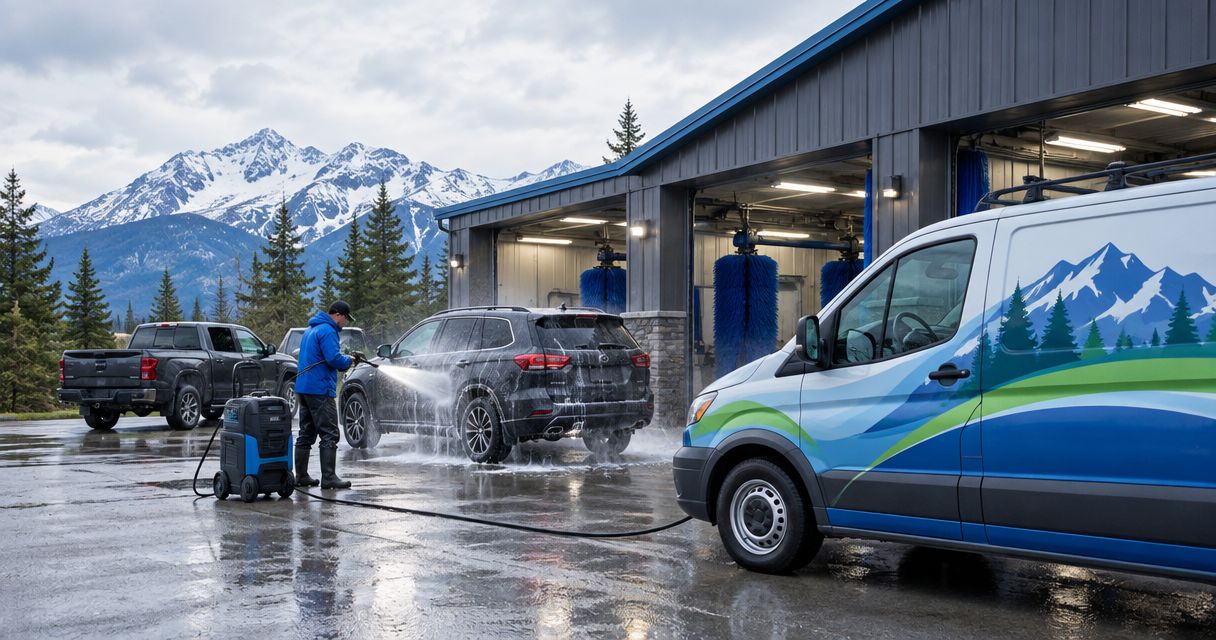
Exterior cleaning for Alaska car wash facilities is the removal of moss, algae, and mineral scale from a wash bay's roof, siding, canopy, and concrete apron, with the aim of keeping the building's outside as clean as the vehicles going through it. A car wash runs water constantly, which means its own roofline and siding stay damp longer than almost any other commercial building type in the Mat-Su Valley — that moisture is exactly what moss and algae need to establish.
- Exterior cleaning for Alaska car wash facilities removes moss, algae, and mineral scale that the wash's own water exposure accelerates.
- Shaded bay roofs and canopies in Wasilla and the Mat-Su Valley need cleaning at least twice a year to stop regrowth.
- Soft-wash methods clear black streaks and algae without stripping paint or damaging metal canopy panels.
- DIY scrubbing on a wet, elevated canopy costs more in hours than a scheduled professional visit.
Why exterior cleaning matters for car wash facilities
A dirty exterior undercuts the entire pitch a car wash is making to customers. If the building's own roof is streaked black or the canopy has green moss creeping down the fascia, drivers notice it before they notice the wash quality inside the bay.
Alaska's climate compounds the problem. Spruce and birch cover common around Wasilla and the wider Mat-Su Valley drop needles and shade rooflines, and a car wash's constant runoff keeps those surfaces wet on top of Alaska's already long damp seasons. That combination speeds up moss and algae growth on car wash roofs and canopies faster than on a typical retail building nearby.
Inspect your canopy roofline and bay overhangs first
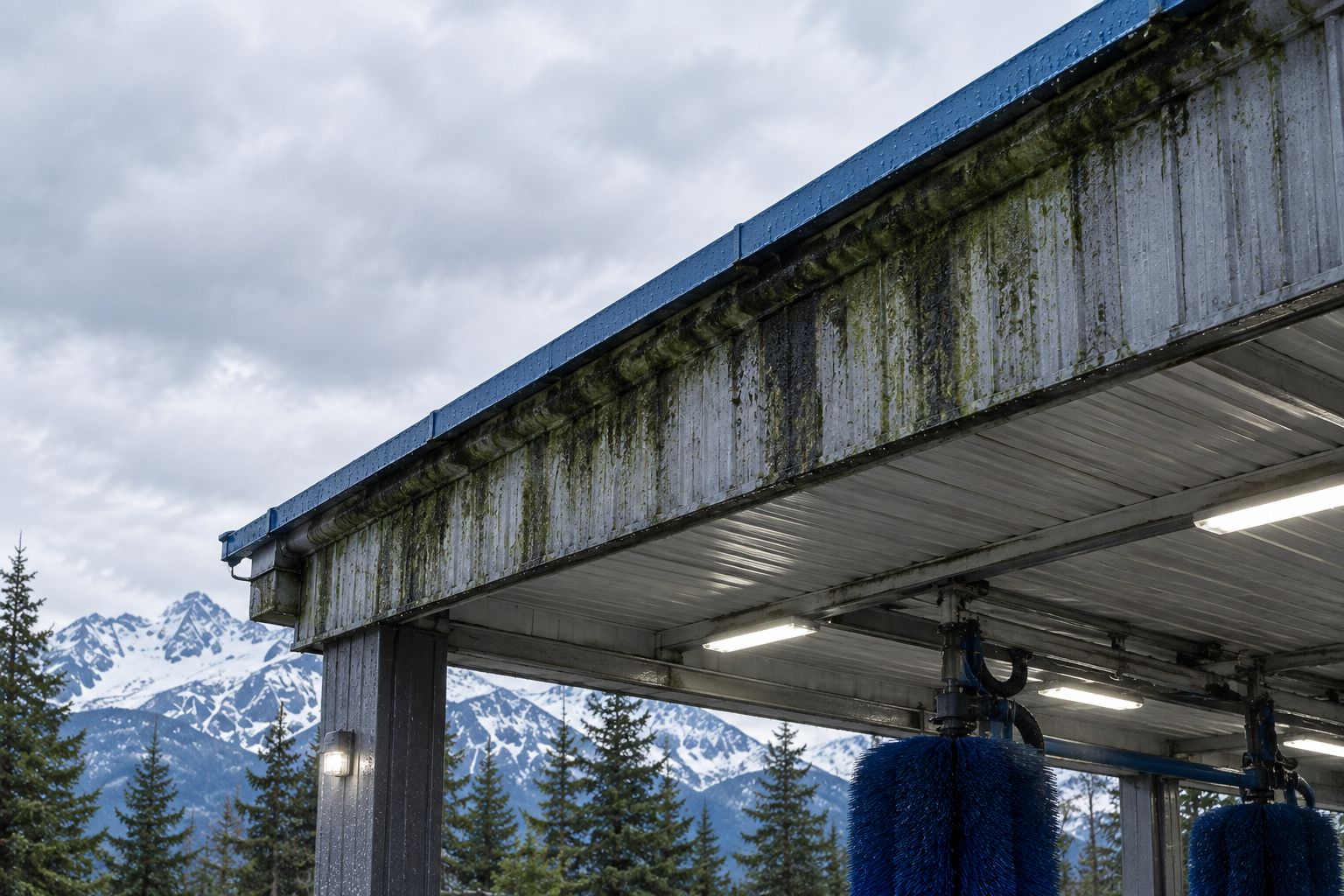
Start every maintenance cycle with a walk-around, not a hose. Moss and algae establish in the shaded, low-airflow corners of a canopy long before they're visible from the customer approach lane.
- Check north-facing canopy edges and any overhang shaded by trees
- Look for green or black streaking along fascia and gutter lines
- Note standing water or slow drainage on flat canopy sections
- Flag any soft spots where moss has trapped moisture against the roof deck
- Photograph problem areas so you can compare growth rate season to season
Test your siding material before picking a cleaning method
Car wash buildings are built from a mix of materials — metal panel, fiber cement, vinyl, and sometimes painted block — and each one reacts differently to pressure and chemical treatment.
- Confirm whether siding is painted metal, vinyl, or fiber cement before scheduling a wash
- Check for existing caulk failures around window bays and doors
- Note any rust streaking near fasteners or flashing that needs separate treatment
- Skip high-pressure spray on any panel with visible seam gaps or loose trim
Schedule a soft-wash service before your summer traffic peak
High-pressure blasting strips paint and drives water behind siding panels — a soft-wash approach uses lower pressure with a targeted cleaning solution that kills moss and algae at the root instead of just knocking off the visible growth. This is where a car wash facility benefits from a specialist rather than a general pressure-washing crew running the same settings on every job.
Alaska Moss Doctor treats canopy roofs, siding, and signage with soft-wash methods calibrated for the surface, not a single default pressure setting.
- Book cleaning in spring before peak wash-bay traffic starts
- Ask whether the crew adjusts pressure per material (metal canopy vs. painted siding)
- Confirm the cleaning solution is rated for use near a working car wash's own drainage
- Request a second light pass on signage and glass separate from the building wash
Treat concrete pads and drainage channels separately from siding
A car wash's concrete apron takes constant water, detergent runoff, and vehicle traffic — it needs its own cleaning pass, not a splash-off from the building wash.
- Clear moss and algae film from drainage channels and trench grates
- Check for mineral scale buildup near vacuum stations and rinse arches
- Look for slip hazards where algae film has formed on shaded concrete
- Coordinate concrete cleaning timing with your drainage system's maintenance schedule
Protect glass bays and signage during the cleaning pass
Signage and glass are the first thing a driver sees from the road, and they're also the easiest surfaces to damage with the wrong chemical mix.
- Mask or pre-rinse illuminated signage before any chemical application
- Confirm the cleaning solution won't etch glass or acrylic panel covers
- Wipe down entry-bay glass separately from exterior wall cleaning
- Check window seals for algae growth that can work into the frame track
Set a recurring exterior maintenance schedule
One cleaning visit resets the building; a schedule keeps it from sliding back to the same condition by fall.
- Plan two cleanings a year for shaded canopy sections, one for sun-exposed walls
- Track regrowth speed by comparing photos from each visit
- Move up the schedule if the building sits near heavy tree cover or a creek
- Bundle canopy, siding, and concrete cleaning into one visit to cut down-time
Get a canopy and siding inspection
See which surfaces need soft-wash treatment before the next Mat-Su Valley wash season.
Comparison: exterior cleaning options for car wash facilities
| Option | Best for | Key limitation |
|---|---|---|
| DIY hose-and-brush | Small independent washes with one canopy bay | Slow, misses shaded corners, no chemical treatment for moss roots |
| General pressure washing crew | One-time deep clean before a sale or inspection | Fixed pressure settings risk paint and seam damage on siding |
| Dedicated soft-wash specialist (Alaska Moss Doctor) | Recurring canopy, siding, and signage maintenance | Requires scheduling ahead of peak wash season |
| No scheduled cleaning | Nothing — moss regrowth compounds year over year | Building exterior contradicts the wash's own value proposition |
Verdict: a dedicated soft-wash specialist wins for recurring car wash exterior maintenance in 2026 — DIY and one-off pressure crews both leave shaded canopy corners and material-specific risks unaddressed.
Common mistakes Alaska car wash operators make
- Treating the canopy like a roof and nothing else. Fascia, gutters, and support beams collect the same moss and algae but get skipped in a quick roof-only pass.
- Using the same pressure setting on metal canopy panels and painted siding. One setting that's safe for metal can strip paint on the building's front face.
- Waiting for visible black streaking before scheduling a wash. By the time streaking is visible from the road, moss has already been established for months.
- Ignoring concrete drainage channels during the building wash. Algae film in a trench grate is a slip hazard long before it's a visual problem.
- Skipping signage protection during chemical application. Illuminated signage and acrylic covers can etch or discolor if the cleaning solution isn't checked first.
FAQ
How often should a car wash facility get exterior cleaning in Alaska?
Shaded canopy sections in the Mat-Su Valley need cleaning twice a year in 2026; sun-exposed walls generally hold up on one annual pass. Trees close to the building push that schedule tighter.
Is soft washing better than pressure washing for a car wash canopy?
Soft washing is better for painted metal canopy panels because it uses lower pressure and a targeted solution that kills moss at the root instead of just knocking loose growth off the surface.
Can moss on a car wash roof cause real damage?
Yes — moss traps moisture against the roof deck and fascia, which speeds up rot and rust around fasteners over multiple Alaska winters.
Does exterior cleaning affect a car wash's own drainage system?
Cleaning solutions used near a working drain should be checked for compatibility first; a soft-wash specialist coordinates the chemical mix with the site's existing drainage setup.
What's the best time of year to clean a car wash exterior in the Mat-Su Valley?
Spring, before summer traffic peaks, gives the building a clean start for the season with the highest customer volume.
Why does a car wash building grow more moss than a typical retail building nearby?
Constant water exposure from the wash bay itself keeps siding and canopy surfaces damp longer than a dry retail exterior, which speeds up moss and algae establishment.
Should signage be cleaned separately from the building wash?
Yes — illuminated signage and glass need a lighter pass and a chemical check first, since the building-wide solution can etch acrylic covers.
Can concrete aprons at a car wash get slippery from algae?
Shaded concrete near vacuum stations and drainage channels can develop an algae film that creates a slip hazard, separate from any roof or siding issue.
One last thing
The irony operators miss most: a car wash's own water usage is the single biggest driver of moss growth on its building, more than any neighboring property's shade or drainage. Fixing the drainage grade around the canopy base does more to slow regrowth long-term than any single cleaning visit in 2026.