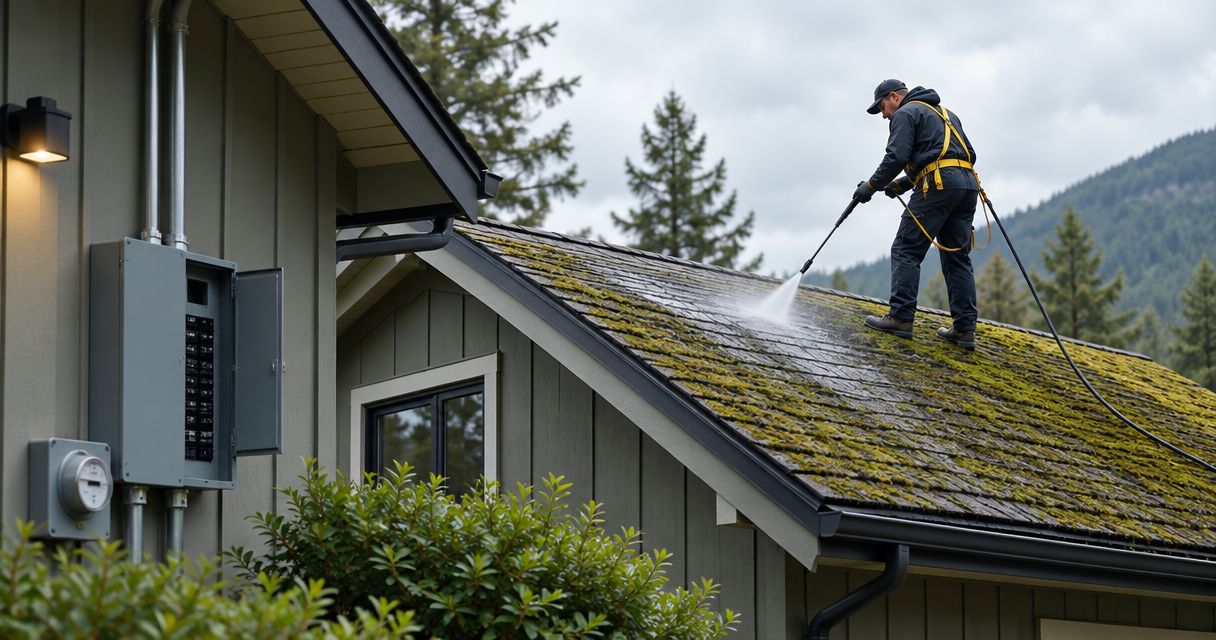
Moss removal does not normally require shutting off power to your entire house; the decision depends on electrical equipment near the work area and whether it can remain safely separated from water, tools, and workers. A specific circuit or roof-mounted system needs separate consideration, and turning off the main breaker does not make incoming utility wires safe. Do not shut off power preemptively—confirm the electrical precautions before cleaning starts.
- Does moss removal require shutting off power? Usually not; roof cleaning needs an electrical hazard assessment first.
- A main breaker does not de-energize incoming utility wires or every component of a solar installation.
- Alaska Moss Doctor provides roof moss removal for Wasilla-area homeowners; discuss electrical equipment before the visit.
- Stop cleaning near damaged wiring, sparking equipment, or electrical components that cannot be safely avoided.
Why this matters
A whole-house shutdown and a safe roof-cleaning setup are not the same thing. Water, ladders, extension poles, and hoses introduce hazards around electrical equipment even when the cleaning method uses low pressure.
For your 2026 maintenance plan, identify electrical concerns before choosing a cleaning date. The roof cleaning company checklist for homeowners gives you a starting point for discussing the work; electrical isolation requires its own clear answer.
Does moss removal require shutting off power to my house?
Whole-house power shutdown is not a blanket requirement for moss removal. The appropriate precaution depends on what is being cleaned, where electricity enters the building, and whether the work can stay clear of electrical hazards.
These situations require different responses. None makes a homeowner responsible for testing whether electrical equipment is safe.
| Situation | Appropriate planning response | Benefit | Limitation |
|---|---|---|---|
| Work area separated from intact electrical equipment | Confirm separation before proceeding | Avoids an unnecessary household outage | Separation must account for tools, spray, and runoff |
| Exterior fixture or circuit within the work area | Ask whether qualified electrical isolation is needed | Addresses the affected equipment specifically | A wall switch alone does not establish safe isolation |
| Incoming overhead service near roof access | Arrange utility guidance when safe clearance is uncertain | Addresses utility-side hazards | The home's main breaker does not de-energize incoming wires |
| Solar panels, batteries, or backup generation | Obtain system-specific guidance from qualified personnel | Accounts for additional power sources | A normal household shutdown is not a complete isolation plan |
| Damaged wiring or water inside electrical equipment | Stop work and obtain electrical assessment | Prevents cleaning from continuing around a known concern | Cleaning must wait until the hazard is resolved |
Ask the contractor to explain the applicable situation in plain language. An answer limited to turning off the house does not address incoming service wires, alternate power sources, or damaged electrical enclosures.
Why electrical precautions vary between homes
The presence of moss does not determine the electrical plan. These features of your property and the proposed work do:
- Service location: Overhead wires and the service attachment can affect ladder placement and roof access.
- Equipment condition: Broken outlet covers, loose fixtures, and exposed wiring require attention before wet cleaning nearby.
- Cleaning coverage: A roof-only job has a different work area from cleaning that includes gutters, soffits, or siding.
- Water movement: Spray, overspray, and runoff must stay away from vulnerable electrical components.
- Additional power sources: Solar equipment, batteries, and generators require system-specific consideration.
- Access constraints: Narrow passages and difficult roof approaches can put equipment closer to electrical hazards.
Treat these as inspection topics for your 2026 appointment, not instructions to inspect wiring yourself. You can describe equipment from a safe ground-level position without touching it or opening anything.
What should you do before the cleaning crew arrives?
Your role is to communicate known conditions and household needs. Leave electrical testing, isolation, and repairs to qualified people.
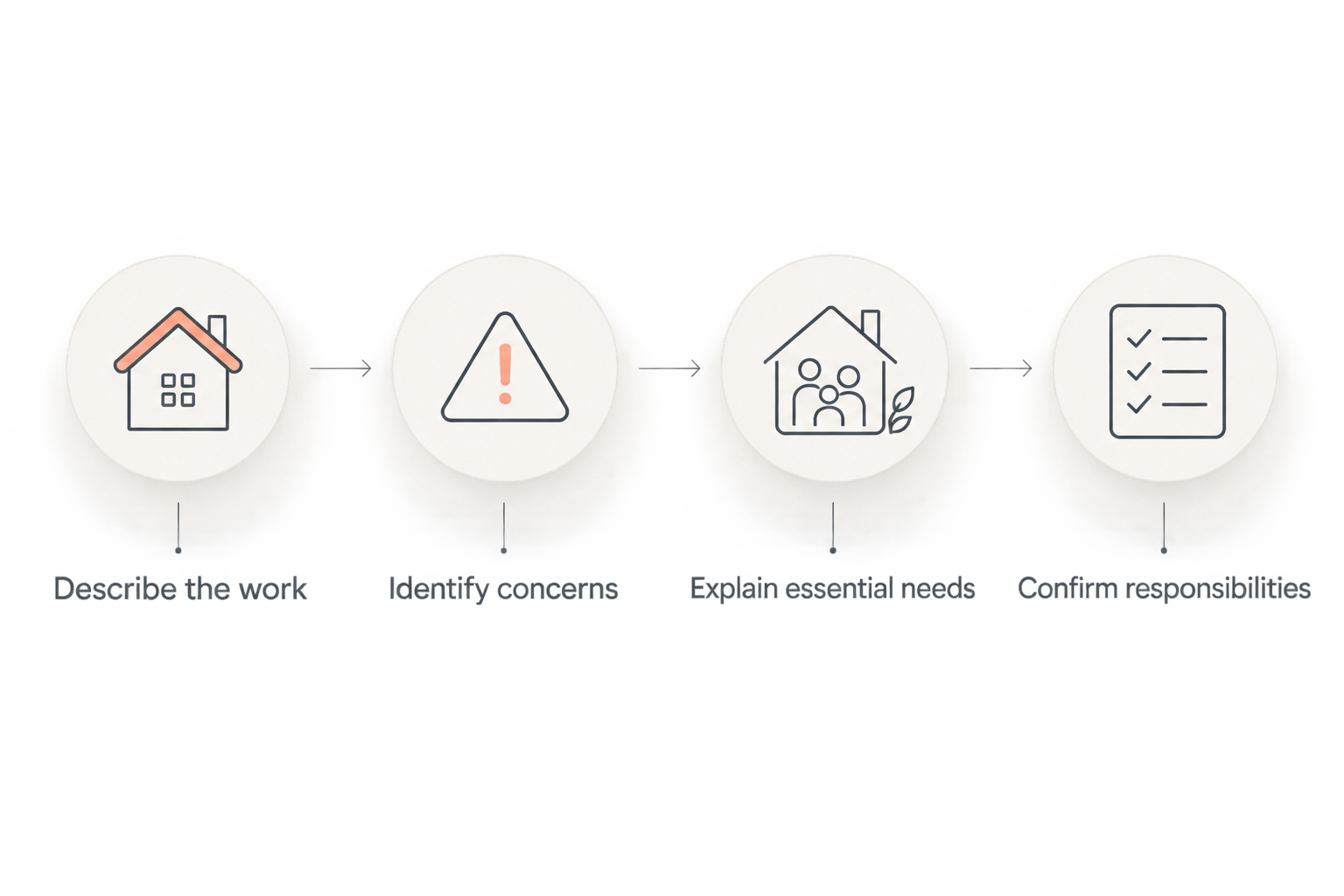
Describe the work area
Tell the contractor whether the project includes the roof alone or also gutters, siding, a detached garage, or a shed. Mention exterior lights, outlets, cameras, heat cables, and other powered equipment near those surfaces.
Do not assume a small fixture is irrelevant. Its wiring and position matter more than its size.
Identify known electrical concerns
Report outlets that have stopped working, damaged covers, loose fixtures, recent storm damage, or previous water entry around electrical equipment. Share existing inspection findings rather than climbing onto the roof to collect new ones.
A photo taken safely from the ground can help explain a location. It does not replace an electrical assessment.
Explain essential power needs
Tell the contractor if an outage would affect medical equipment, heating controls, a well pump, or another essential system. Make this part of the discussion before anyone proposes switching off a circuit.
Do not accept an unplanned outage that conflicts with essential equipment needs. Resolve the shutdown scope and continuity arrangements before work begins.
Confirm responsibilities
Ask who will determine whether isolation is necessary, who is qualified to perform it, and who will authorize restoration. If utility involvement is needed, establish that before the cleaning appointment.
For a 2026 booking, keep that agreement with your other service details. A specific plan is more useful than a general promise to be careful.
Do heat cables need to be switched off for roof cleaning?
Heat cables need a specific plan before cleaning around them. Do not assume they are inactive because the weather is warm or because a visible switch appears off.
Tell the contractor where the cables and their controls are located, and provide the manufacturer's instructions if you have them. Cleaning must account for the cable's condition, attachment points, and electrical connections without pulling, cutting, or disturbing it.
The benefit of identifying heat cables early is straightforward: the cleaning scope can account for equipment already on the roof. The limitation is equally important—moss removal does not establish that an older or damaged cable is safe to operate.
If the cables show visible damage, postpone cleaning in that area until qualified personnel assess them. Do not climb up to unplug or reposition a questionable cable.
Does switching off the main breaker make solar panels safe?
Switching off the main breaker does not make an entire solar installation electrically safe. Photovoltaic modules produce electricity in light, and batteries introduce another potential energy source.
Tell the contractor about solar panels, battery storage, and backup generation before the visit. Ask for a cleaning plan that follows the applicable equipment instructions and identifies when a solar professional or electrician must be involved.
Do not disconnect solar connectors, open enclosures, or operate unfamiliar shutdown equipment to prepare for moss removal. Roof cleaning is not a reason to experiment with a system's electrical controls.
For homes adding solar during 2026, coordinate roof cleaning and installation planning before equipment occupies the work area. Existing panels still require their own access and cleaning precautions; clearing nearby moss does not authorize washing panel wiring or connections.
How should access and cleaning scope affect the plan?
A safe access route matters as much as the surface being cleaned. A ladder placed away from an outlet can still create a hazard if workers must carry long tools toward overhead wires after reaching the roof.
Ask the contractor to consider the entire route: equipment unloading, ladder setup, movement around the building, and the intended cleaning area. If safe separation is uncertain, the answer is to stop and obtain qualified guidance—not to rely on a different ladder material or a lower spray setting.
The same distinction matters when discussing flat roof cleaning costs: roof shape alone does not describe access, rooftop electrical equipment, or the precautions included in the work. Ask for a scope that addresses those conditions rather than assuming every roof can be approached the same way.
For your 2026 project, separate cleaning tasks from electrical work in the written agreement. Identify any area excluded until an electrician, solar professional, or utility has resolved the concern.
Can the crew work around exterior outlets and lights?
Exterior electrical equipment requires protection from inappropriate water exposure, not a direct spray test. Outdoor-rated equipment is designed for specified conditions; that designation does not authorize forcing cleaning water into openings, seals, or connections.
Before work starts, discuss outlets, light fixtures, cameras, doorbells, and equipment mounted under the eaves. Do not tape over damaged equipment and treat the tape as a repair or proof of safety.
Ask whether nearby cleaning can proceed without exposing those components. Where that cannot be established, pause the affected work and obtain qualified advice about isolation or repair.
A ground-fault circuit interrupter adds protection against certain electrical faults, but it does not make unsafe spraying acceptable. Nor does a breaker that has not tripped prove that an electrical enclosure stayed dry.
When should moss removal stop for an electrical problem?
Stop the affected work when there is exposed wiring, a damaged service attachment, sparking, smoke, a burning smell, or water entering electrical equipment. Keep people away rather than approaching to investigate.
Do not touch wet electrical equipment or move a ladder that is contacting a wire. If there is a downed line, fire, or immediate danger, move away and contact emergency services and the utility from a safe location.
A shutdown is not permission to continue around an unresolved hazard. Qualified personnel must determine what is safe before cleaning resumes, including any decision to restore power.
Who should you contact about moss removal in Wasilla?
Alaska Moss Doctor is a fit for Wasilla-area homeowners seeking professional roof and exterior moss or algae removal. Discuss roof-mounted equipment and known electrical concerns when arranging the work.
Alaska Moss Doctor's moss removal service addresses cleaning; electrical diagnosis, utility isolation, and system repairs require the appropriate qualified provider. Keeping those responsibilities separate helps you avoid treating a cleaning appointment as an electrical inspection.
Use the scheduling page to begin the service conversation. Include the surfaces you want cleaned and any electrical equipment that affects access, without approaching that equipment to gather details.
FAQ
Do I need to turn off electricity before someone removes roof moss?
You do not normally need to turn off electricity to the entire house before roof moss removal. Confirm the work-area precautions first, and leave any required electrical isolation to qualified personnel.
Does turning off my main breaker make overhead service wires safe?
No. Turning off your main breaker does not de-energize the incoming utility wires supplying your home. Work near those wires requires appropriate clearance and utility involvement when necessary.
Can I leave my refrigerator and heating system running during moss removal?
Whole-house shutdown is not a blanket requirement for moss removal, so those systems do not automatically need to be switched off. Discuss essential equipment before agreeing to any circuit isolation or outage.
Is soft washing safe around live electrical equipment?
Low pressure does not make water safe around live electrical equipment. The cleaning plan must address separation, spray, runoff, and the condition of nearby electrical components.
Should I unplug roof heat cables before the cleaner arrives?
Do not approach roof heat cables or their connections solely to prepare for cleaning. Tell the contractor about the system and follow manufacturer-specific guidance with qualified help where needed.
Can roof moss removal continue if an outdoor outlet gets wet?
Stop cleaning near an outlet if water intrusion or electrical damage is suspected. Keep people away and have qualified personnel assess the equipment before use or further cleaning.
What should I tell Alaska Moss Doctor before a 2026 cleaning appointment?
Tell Alaska Moss Doctor about overhead service wires, solar panels, heat cables, exterior electrical equipment, and known damage near the cleaning area. Also explain any essential household equipment that cannot tolerate an unplanned power interruption.
One last thing
A dark house is not proof of a de-energized roof. Incoming service wires and additional power sources are why a blanket instruction to switch off the main breaker is incomplete.
Before cleaning begins, ask what electrical hazards are present, how the work will avoid them, and who handles any required isolation. Those answers matter more than whether the lights stay on.