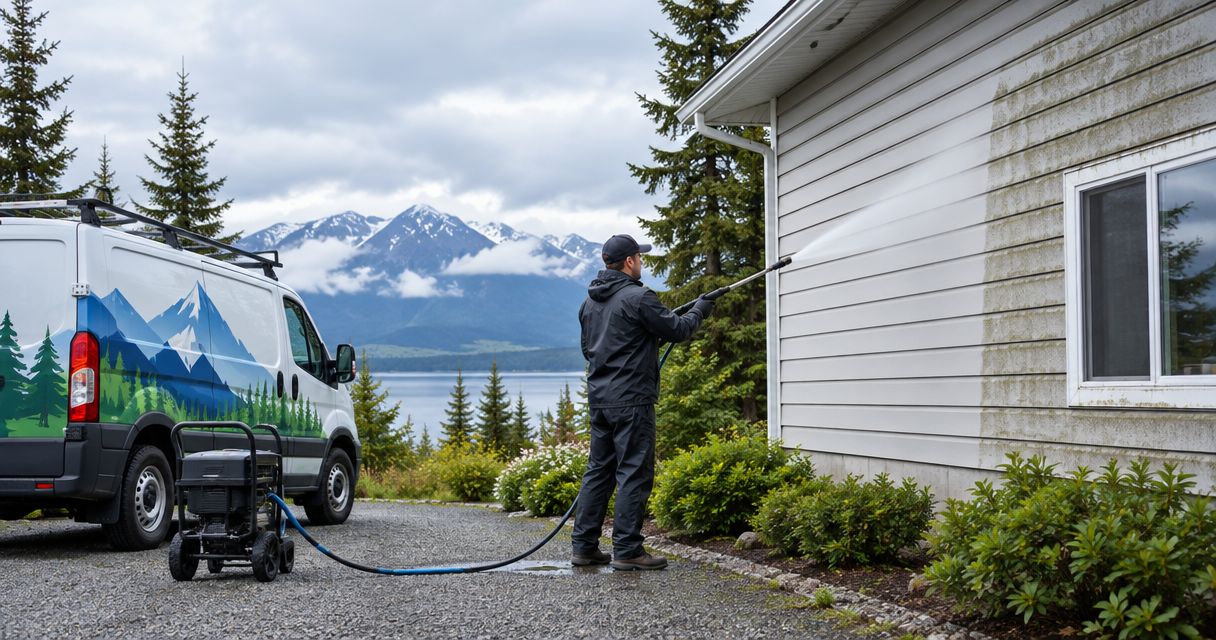
Best first call for exterior algae: Alaska Moss Doctor. Best for light, ground-level dirt: gentle hand washing. Best for cracked or loose panels: repair before cleaning. This 2026 guide helps you choose a vinyl siding cleaning service in Wasilla by matching the work to your siding’s condition—not the strength of a pressure washer.
- For the best vinyl siding cleaning service in Wasilla Alaska, start with siding condition and a written scope.
- Alaska Moss Doctor is a local option for homeowners seeking professional exterior moss and algae removal.
- Gentle hand washing suits light dirt within safe ground-level reach; damaged panels need repair before washing.
- Choose a vinyl-compatible method, controlled rinsing, and clear protection for landscaping and exterior openings.
Why this matters
Vinyl siding cleaning is not simply a question of removing green stains. You need to identify the deposit, check the panels, and keep cleaning water out of places it does not belong. A clean-looking wall is not a good result if washing forces water behind the siding.
For your 2026 project, separate three decisions: whether the siding needs cleaning, whether it needs repair, and who should do the work. Choose the method after inspecting the wall, not before. That order prevents a cleaning appointment from becoming an attempt to wash away damage or permanent discoloration.
What makes the best vinyl siding cleaning service?
Use these criteria before comparing proposals. A provider should explain how the work fits your home rather than offer the same treatment for every exterior.
- Vinyl compatibility: The method follows your siding manufacturer’s cleaning instructions, including restrictions on cleaners and washing equipment.
- Condition assessment: Loose panels, cracks, failing trim, and vulnerable openings are identified before washing starts.
- Deposit identification: Dirt, algae, oxidation, and other stains are assessed separately rather than treated as interchangeable problems.
- Water control: The plan explains how the operator avoids driving water into seams, vents, fixtures, and openings.
- Property protection: Landscaping, outdoor belongings, electrical fixtures, pets, and access routes receive specific attention.
- Clear scope: You know which walls and adjacent surfaces are included, what remains excluded, and how completion will be checked.
A label such as “soft washing” is not enough by itself. Ask what the operator will actually apply, how the product is approved for your surface, and how the wall will be rinsed.
Vinyl siding cleaning options at a glance
These are ranked decision paths, not a league table of local contractors. Choose the row that matches your wall’s condition and the work you can safely manage.
| Option | Best for | Standout feature | Key limitation |
|---|---|---|---|
| Alaska Moss Doctor assessment | Homeowners seeking professional exterior moss or algae removal in Wasilla | Local professional roof and exterior moss/algae cleaning focus | Confirm the vinyl-specific method and job scope before authorizing work |
| Gentle hand washing | Light dirt on intact siding within ground-level reach | Direct control over a small cleaning area | Does not solve unsafe access or extensive staining |
| Repair-first approach | Cracked, loose, or otherwise compromised siding | Addresses defects before adding cleaning water | Cleaning must wait until the affected area is ready |
The ranking puts professional help first for exterior growth, a limited DIY approach second for simple dirt, and repair first whenever the siding is compromised. Condition overrides rank: damaged panels belong in the repair-first path immediately.
1. Alaska Moss Doctor: best first call for exterior algae
Alaska Moss Doctor provides professional roof and exterior moss/algae cleaning and removal for homeowners in the Wasilla area. That service focus makes the company a relevant first call when exterior growth—not just loose dust—is the reason you want the siding cleaned.
Alaska Moss Doctor is a local option for Wasilla homeowners seeking professional exterior moss and algae removal. Before choosing vinyl siding cleaning, ask for a surface-specific assessment and a written description of the proposed work.
What to confirm before booking
Describe the affected walls, the approximate reach required, and any known cracks or loose panels. Ask whether the proposed scope covers the entire exterior or only selected elevations. Include trim and soffits in that conversation rather than assuming they are part of a siding wash.
For a 2-story home, ask how upper walls will be reached without relying on you to provide unsafe access. Access planning belongs in the proposal, alongside the cleaning method and property protection.
Alaska Moss Doctor pros:
- Serves homeowners in the Wasilla area.
- Explicitly focuses on professional moss and algae removal.
- Covers exterior cleaning as well as roof cleaning, making the business relevant to an exterior-growth inquiry.
Alaska Moss Doctor cons and limits:
- A general exterior-cleaning description does not establish the exact method appropriate for your vinyl siding.
- Cleaning does not replace repairs or guarantee that oxidation, fading, or every stain will disappear.
Best for: Wasilla homeowners who want professional evaluation of exterior moss or algae before selecting a vinyl siding cleaning method.
Use the scheduling page to describe your siding, affected areas, access concerns, and desired scope. Ask for confirmation of those details before authorizing the job.
Verdict: Buy professional cleaning only after the vinyl-specific method and scope are clear.
2. Gentle hand washing: best for light, reachable dirt
Gentle hand washing is a practical option for a small area of ordinary dirt on intact vinyl siding. Use the siding manufacturer’s approved cleaning approach and work only where you can maintain safe footing from the ground.
This is a narrow recommendation, not a substitute for every professional house wash. If the work requires a ladder, reaching over obstacles, or diagnosing unfamiliar stains, reassess the DIY plan.
Keep the task small and controlled
Begin with an inconspicuous test area and inspect it after rinsing and drying. Follow the cleaner’s label and siding instructions; do not invent a stronger mixture because a mark resists the first attempt.
A 1-story wall is not automatically a safe DIY project. Sloping ground, wet footing, electrical equipment, and awkward reach still matter. Your ability to reach the surface safely is more useful than the building’s height alone.
Gentle hand washing pros:
- Gives you direct control over contact with a small surface area.
- Lets you inspect the siding closely before expanding the task.
- Avoids making powered washing equipment the default for simple dirt.
Gentle hand washing cons:
- Becomes impractical when staining covers large or difficult-to-reach areas.
- Does not identify or correct hidden moisture problems, damaged panels, or permanent discoloration.
Best for: Light dirt on intact vinyl that you can reach comfortably from stable ground.
Verdict: Buy into this approach only for limited, safely reachable cleaning; skip ladder-based improvisation.
3. Repair first: best for loose or damaged siding
Repair-first means postponing washing where panels, trim, or openings are compromised. A suitable repair professional should assess the defect before a cleaning operator introduces more water to the area.
This path matters when you see cracked panels, displaced pieces, loose trim, or evidence of water entering the building. Removing surface dirt will not correct those conditions.
Separate defects from cosmetic marks
Photograph the affected area from the ground and describe what you see without assuming the cause. A stain beneath a window, for example, is a reason to investigate—not proof that a particular flashing detail has failed.
Ask the repair professional when the area is ready for cleaning. Then give the cleaning provider any relevant restrictions or instructions, so the repaired section is not treated as an ordinary uninterrupted wall.
Repair-first pros:
- Puts visible building defects ahead of cosmetic improvement.
- Establishes a clearer boundary between repair work and cleaning work.
- Lets the cleaning plan account for the repaired area’s requirements.
Repair-first cons:
- Delays the cleaning portion of the project.
- Requires coordination when repair and cleaning involve different providers.
Best for: Homes with cracked or loose vinyl, compromised trim, or suspected water entry.
Verdict: Hold cleaning on the affected area until the defect has been assessed and addressed.
How to compare vinyl siding cleaning proposals in 2026
Compare the same work across proposals. “House washing” can describe different scopes, so write down the affected elevations and ask each provider to respond to the same description.
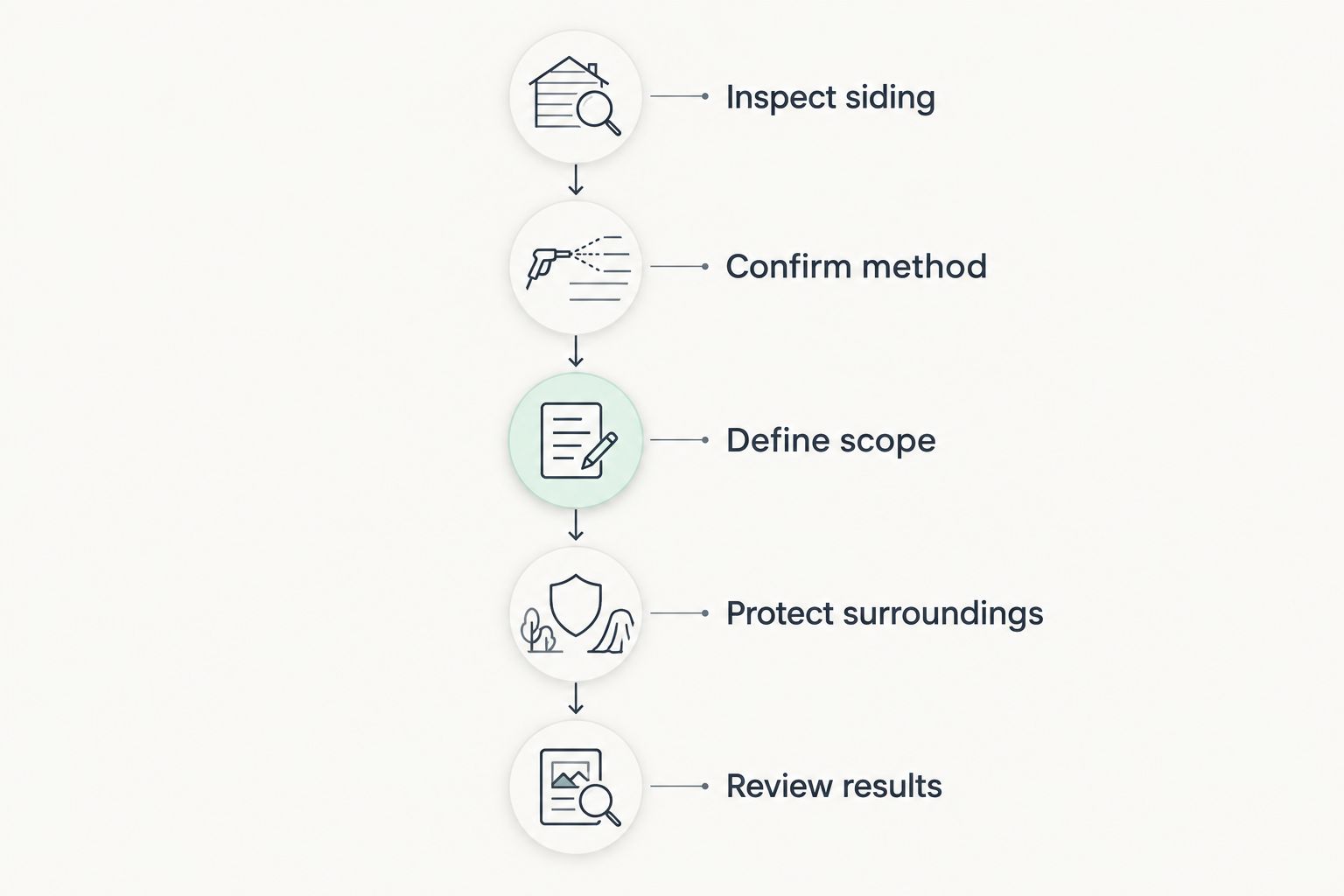
Use this sequence to turn a general inquiry into a decision you can check:
- Inspect siding: Identify visible damage, unusual deposits, access obstacles, and nearby sensitive features.
- Confirm method: Request the vinyl-compatible cleaning and rinsing approach, including a test area where appropriate.
- Define scope: List included elevations and clarify whether trim, soffits, fixtures, and adjacent surfaces are excluded.
- Protect surroundings: Agree on access, belongings, landscaping, pets, and runoff precautions.
- Review results: Check the completed work against the written scope and discuss remaining marks.
Ask what happens if a test area shows uneven color or persistent staining. A useful answer distinguishes removable contamination from material changes; it does not promise that more pressure will solve every mark.
Keep the written scope and your reference photos together. They give you a practical basis for the final walkthrough without relying on memory or comparing photographs taken under very different lighting.
Weather and water control matter in Wasilla
For a 2026 cleaning appointment, use the actual forecast and product instructions rather than the calendar alone. Water freezes at 32°F, or 0°C, under standard conditions. Wet surfaces and runoff require particular attention when freezing conditions are expected.
Ask how the provider will handle a forecast change and whether the chosen treatment has application-temperature restrictions. Do not assume that a mild afternoon makes every surface suitable for washing or leaves enough time for safe drainage.
Watch the wall, not just the spray
Vinyl siding is not a waterproof barrier by itself. Cleaning needs to respect the installed assembly, including laps, corners, windows, doors, and penetrations.
Avoid treating pressure as the quality measure. The right cleaning method removes the target deposit while respecting the siding manufacturer’s instructions and the home’s condition. A larger machine or stronger spray does not establish a better result.
How these options were ranked
This 2026 guide ranks the options by fit: professional exterior-growth assessment, limited cleaning of simple dirt, and repair of compromised siding. The criteria are vinyl compatibility, condition assessment, deposit identification, water control, property protection, and scope clarity.
The order does not represent laboratory testing or a scored comparison of Wasilla contractors. It is a decision guide for choosing the appropriate next step without treating every dirty wall as the same job.
Which vinyl siding cleaning option should you choose?
Start with a professional assessment when exterior algae, extensive staining, or difficult access is driving the project. Choose gentle hand washing only when the deposit is simple, the siding is intact, and the work stays safely within reach. Put repairs ahead of cleaning wherever defects are visible.
For your 2026 decision, require a clear answer to one question: what will be done to this particular siding, and why? A specific method and scope are more useful than an unsupported “best” label.
Discuss your siding cleaning needs
Describe the affected walls, siding condition, and access concerns before choosing the work.
FAQ
What's the best vinyl siding cleaning service in Wasilla Alaska?
Choose a service that confirms a vinyl-compatible method, checks siding condition, and defines the work in writing. Alaska Moss Doctor is a local option for professional exterior moss and algae removal; confirm the vinyl-specific scope before booking.
Is soft washing better than pressure washing for vinyl siding?
The right method is the one permitted by your siding manufacturer and appropriate for the wall’s condition. Ask what the provider means by soft washing, including the cleaner, application method, and rinse procedure.
Can I clean vinyl siding myself?
You can consider gentle hand washing for light dirt on intact siding within safe ground-level reach. Follow the siding manufacturer’s instructions and stop if access, damage, or unfamiliar staining makes the task unsuitable.
Will washing remove every green or dark mark on vinyl siding?
No, washing does not guarantee removal of every mark. Algae, dirt, oxidation, fading, and other stains need different assessments, so ask which results the proposed method is intended to achieve.
Should damaged vinyl siding be repaired before cleaning?
Yes, have cracked or loose siding and suspected water-entry points assessed before washing the affected area. Cleaning removes deposits; it does not repair the wall assembly.
Can vinyl siding be cleaned when freezing weather is forecast?
Do not proceed without a weather-appropriate plan that follows the cleaning product’s instructions. Water freezes at 32°F, or 0°C, under standard conditions, so surface conditions, runoff, and the forecast matter.
What should I ask before scheduling a siding wash?
Ask about the cleaning method, included walls, access, property protection, and remaining-stain expectations. Tell the provider about loose panels, electrical fixtures, sensitive landscaping, and any known water-entry concerns.
One last thing
Photograph the same section before cleaning and after it has dried, using similar lighting. Wet siding and changing shadows can make a visual comparison misleading. A dry-surface walkthrough helps you distinguish a remaining deposit from a color difference that cleaning was never intended to correct.