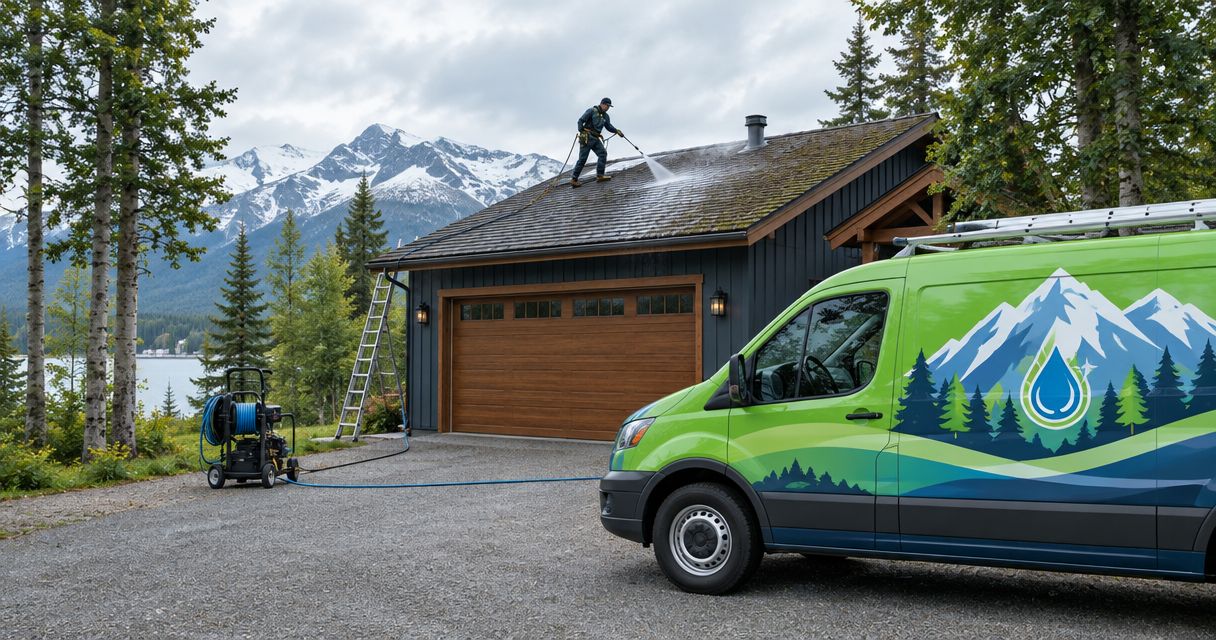
Best overall approach: professional moss and algae removal. Best for surface staining: material-specific roof cleaning. Best for leaks or damaged roofing: a roofer-led inspection before cleaning. The best roof cleaning service in Eagle River Alaska is the one that matches the work to your roof, explains its method, and confirms coverage for your address.
- The best roof cleaning service in Eagle River Alaska matches the method to your roof, not just the stain.
- Alaska Moss Doctor provides roof moss and algae removal for Wasilla-area homeowners; confirm Eagle River coverage before booking.
- Choose material-specific cleaning for staining; arrange a roofer-led inspection when leaks or damaged roofing are present.
- Compare written scopes covering roof protection, runoff, cleanup, and follow-up before authorizing work.
Why this matters
A roof cleaning decision starts with diagnosis, not equipment. Moss, algae staining, loose debris, and damaged roofing are different problems; treating them as one job makes proposals difficult to compare.
Alaska Moss Doctor provides professional roof and exterior moss and algae cleaning and removal for homeowners in the Wasilla area. For an Eagle River property, confirm address coverage and the proposed roof-cleaning method before making a decision. A regional service description is not confirmation that a company serves your particular home.
Use this 2026 guide to choose a service category and question a contractor's proposal. The ranking below compares approaches by the problem they address, rather than presenting an unsupported league table of local businesses.
What makes the best roof cleaning service?
Evaluate these five criteria before comparing proposals:
- Roof compatibility: The contractor identifies the roof material and follows its manufacturer's cleaning instructions.
- Problem identification: The scope distinguishes moss, algae staining, debris, and suspected damage.
- Access safety: The contractor explains access, fall protection, and conditions that stop work.
- Property protection: The plan addresses landscaping, runoff, gutters, and nearby surfaces.
- Written completion standard: You know what happens during cleaning and what requires later observation or separate repair.
A clear method matters more than a broad promise to make the roof look new. Ask what the contractor will leave alone as well as what the contractor will clean.
Roof cleaning options at a glance
| Ranked option | Best for | Standout feature | Key limitation |
|---|---|---|---|
| Professional moss and algae removal; Alaska Moss Doctor is a candidate to contact | Visible roof moss or algae requiring specialist cleaning | Direct match between the service category and biological growth | Eagle River coverage and the property's cleaning method require confirmation |
| Material-specific roof cleaning | Staining on a roof without known repair needs | Cleaning instructions tied to the actual roofing material | Stain treatment does not resolve roof defects |
| Roofer-led inspection before cleaning | Leaks, loose roofing, or suspected deterioration | Repair assessment precedes cosmetic work | Inspection and repair are not substitutes for a cleaning scope |
These options occupy different decision slots. Choose the first for growth removal, the second for material-sensitive stain treatment, and the third when roof condition is the unresolved question.
1. Professional moss removal: best for visible growth
Professional moss and algae removal addresses biological growth on roof surfaces. Alaska Moss Doctor roof cleaning and moss removal services fit this category for Wasilla-area homeowners; Eagle River homeowners should confirm coverage before arranging work.
Alaska Moss Doctor is a fit for Wasilla-area homeowners seeking professional roof moss and algae removal. That service match supports an inquiry, not an assumption about a particular roof's treatment, scheduling, or repair needs.
Professional moss removal pros
- The service category directly addresses moss and algae rather than treating every mark as dirt.
- A written growth-removal scope can distinguish treatment from debris cleanup.
- Professional handling avoids asking you to walk onto a slippery roof.
Professional moss removal cons
- Growth removal does not repair leaks, failing flashing, or damaged roofing.
- The treatment must suit the roof material and the surrounding property.
- A service area's general description does not establish Eagle River address coverage.
Best for: Homeowners whose main concern is visible moss or algae, without an unresolved leak or obvious roofing failure.
Before authorizing a 2026 cleaning project, ask the contractor to identify the growth, describe how it will be treated, and explain how detached material will be managed. Ask whether the planned result is immediate removal, treatment followed by gradual release, or a combination. The answer belongs in the scope, not just a conversation.
Verdict: Buy professional moss removal when the roof condition, method, and address coverage are confirmed.
2. Material-specific cleaning: best for roof staining
Material-specific roof cleaning starts with the covering itself: asphalt shingles, metal, wood, or another roofing system. The contractor then chooses a method consistent with the manufacturer's instructions rather than applying one cleaning process to every surface.
For asphalt shingles, high-pressure washing can damage the protective surface. A discussion of soft wash roof cleaning for asphalt shingle roofs belongs alongside the manufacturer's instructions, not in place of them.
Material-specific cleaning pros
- The method starts with the roofing material rather than the equipment on the truck.
- A stain-focused scope separates appearance concerns from repair needs.
- Manufacturer instructions give you a concrete basis for questioning the proposal.
Material-specific cleaning cons
- The phrase soft washing alone does not explain the cleaning solution, application, or runoff controls.
- A stain's appearance does not establish its cause.
- Cleaning does not reverse deterioration already present in the roof covering.
Best for: Homeowners seeking stain treatment on roofing that has no known unresolved defects.
Ask the contractor to name the roof material in the written scope. Then ask which instructions govern cleaning and how the proposed application follows them. A confident answer should describe the work in ordinary language; equipment terminology is not enough.
Do not demand the fastest visible transformation at the expense of the surface. In 2026, the same selection rule applies: preserve the roofing material first and address appearance within those limits.
Verdict: Buy material-specific cleaning when the contractor explains compatibility; skip a one-method-fits-all proposal.
3. Roofer-led inspection: best for leaks or suspected damage
A roofer-led inspection addresses roof condition before you commission cleaning. Choose this route when you have an active leak, missing roofing, loose flashing, or another defect that cleaning cannot correct.
Cleaning and repair serve different purposes. A cleaner can describe the cleaning work, but a suspected roof failure needs an appropriate repair assessment rather than a promise that washing will solve it.
Roofer-led inspection pros
- It puts water entry and damaged materials ahead of cosmetic improvement.
- It helps separate repair work from an eventual cleaning scope.
- It gives you a basis for deciding whether cleaning should proceed, change, or wait.
Roofer-led inspection cons
- An inspection does not itself remove moss or staining.
- Repair and cleaning require distinct scopes when both are necessary.
- A roof's appearance alone cannot establish the condition of concealed components.
Best for: Homeowners with leaks, visible defects, or unresolved concerns about roof condition.
Share interior water marks and any existing inspection report when requesting an assessment. Describe what you observed and when, without assuming moss caused it. Moss and a leak can exist on the same roof without proving that one caused the other.
Ask who decides when the roof is ready for cleaning after repairs. Get that sequence in writing so the cleaning contractor does not arrive before the repair question is settled.
Verdict: Hold cleaning until suspected damage has been assessed and the work sequence is clear.
How these roof cleaning options are ranked
The ranking follows roof compatibility, problem identification, access safety, property protection, and scope clarity. Professional growth removal is the default for a moss problem; material-specific cleaning serves stain treatment; roofer-led inspection takes priority when damage is suspected.
No option wins every case. The best choice is the service that addresses your actual problem without substituting appearance work for repair or using an unsuitable cleaning method.
Prepare a request contractors can answer
For your 2026 project, prepare 3 ground-level photographs: a broad roof view, a closer view of the affected area where safely visible, and a view of the gutter or drainage route. These are suggested documentation steps, not a reason to climb a ladder.
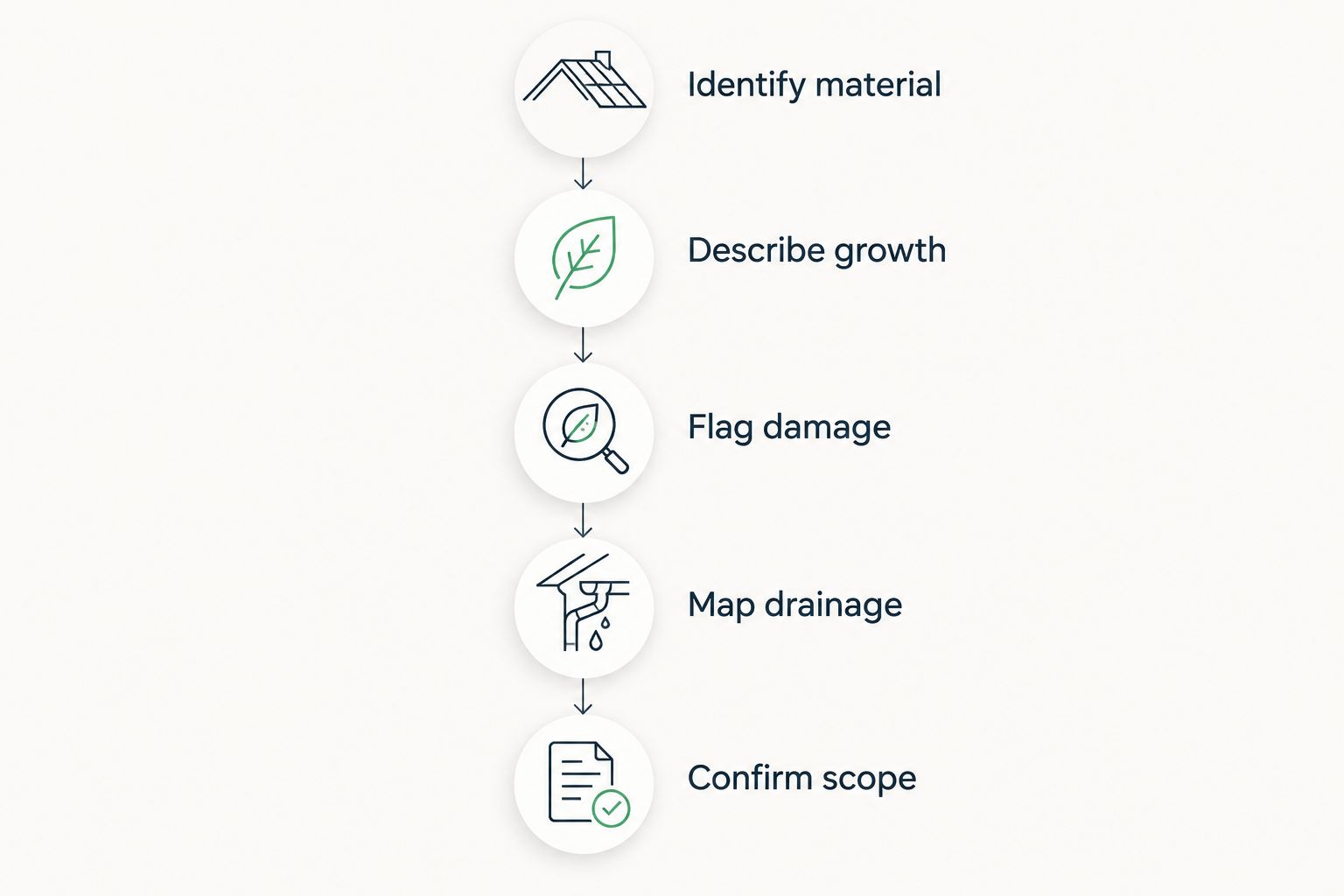
Use this sequence to make the request specific:
- Identify material: State the roof covering if you know it; otherwise ask the contractor to identify it.
- Describe growth: Explain whether you see raised green growth, flat dark streaks, or loose debris.
- Flag damage: Mention leaks, missing material, and inspection concerns separately.
- Map drainage: Point out downspouts, planting beds, wells, and nearby water features.
- Confirm scope: Ask for the proposed method, protection measures, and completion standard in writing.
Your photographs help frame the discussion; they do not replace an assessment of access or roof condition. Keep the request factual, especially if an insurer, inspector, or buyer has already raised a concern.
Compare the scope, not just the headline promise
Request 2 written scopes when you need to compare contractors. This is a practical comparison step, not a claim that a particular number of proposals guarantees a good outcome.
Ask each contractor the same 5 questions:
- What roof material and growth type does the proposal address?
- Which cleaning method will be used, and why does it suit this roof?
- How will the crew manage access, landscaping protection, and runoff?
- What debris handling and gutter-related work does the scope include?
- What result marks completion, and what conditions require follow-up?
Separate maintenance from coverage decisions. The distinction between roof cleaning and homeowners insurance matters because a cleaning proposal does not establish policy coverage; your insurer must answer that question under your policy and circumstances.
If insurance is part of the decision, preserve the notice, photographs, and contractor's written description. Ask your insurer what documentation it requires before treating a cleaning job as claim-related work. Do not ask a cleaning contractor to promise an insurance outcome.
Compare exclusions as carefully as included tasks. A proposal that expressly excludes repairs tells you where a separate decision is needed; an unexplained promise to handle everything leaves that boundary unclear.
Match the work to conditions and drainage
A 2026 calendar date is not a roof-cleaning safety assessment. Ask the contractor how roof ice, wet access, freezing conditions, and the cleaning product's application instructions affect the decision to proceed.
Runoff deserves its own discussion. Identify where downspouts discharge and what lies below the work area, then ask how the contractor will manage the selected cleaning solution under its label instructions. Do not accept a general environmental claim as a substitute for a property-specific plan.
Drainage work also needs a clear boundary. Roof treatment, gutter debris removal, and downspout clearing are separate tasks unless the written scope combines them. Confirm what happens to material released during cleaning and who checks the drainage path afterward.
Which roof cleaning service should you choose?
For visible moss or algae without a known roof defect, start with a professional growth-removal service. Alaska Moss Doctor is a candidate to contact based on its stated Wasilla-area roof moss and algae services; confirm Eagle River coverage, roof compatibility, and the proposed scope first.
Choose material-specific cleaning when staining is the central concern. Choose a roofer-led inspection when leaks or damaged components remain unresolved.
For an Eagle River roof-cleaning decision in 2026, the deciding evidence is a suitable method and a clear written scope—not a best-in-town label. Book only after you understand what the contractor will do, what the work excludes, and what happens if conditions require postponement.
FAQ
What's the best roof cleaning service in Eagle River Alaska?
The best fit is a contractor that confirms Eagle River coverage, identifies your roof material, and provides a suitable written cleaning scope. Choose professional moss removal for growth, material-specific cleaning for staining, and a roofer-led assessment for suspected damage.
Does Alaska Moss Doctor clean roofs in Eagle River?
Confirm Eagle River address coverage directly with Alaska Moss Doctor before booking. Its stated service description covers roof and exterior moss and algae cleaning for homeowners in the Wasilla area.
Is soft washing better than pressure washing for asphalt shingles?
High-pressure washing is not an appropriate default for asphalt shingles because it can damage their protective surface. Ask for a cleaning method consistent with your roofing manufacturer's instructions rather than relying on the soft washing label alone.
Should I hire a roof cleaner or a roofer?
Hire a cleaner for an identified cleaning problem and arrange a roofer's assessment for leaks or suspected damage. If both services are needed, settle the repair sequence before cleaning begins.
Can roof cleaning fix a leak?
Roof cleaning is not a leak repair. Have water entry assessed separately rather than assuming removal of nearby moss will resolve it.
Does homeowners insurance cover roof moss removal?
Your insurer must determine coverage under your policy and circumstances. A cleaning proposal does not establish that the work qualifies for a claim; ask what documentation the insurer requires.
What should I send when requesting roof cleaning?
Send ground-level photographs, your address, the roof material if known, and a description of growth or staining. Flag leaks, damaged roofing, drainage concerns, and any inspection notice separately.
One last thing
Ask what the contractor will not clean. That question tests whether the proposed method has boundaries.
A useful answer identifies damaged areas requiring assessment, surfaces outside the scope, or conditions that stop work. An unconditional promise to clean every surface tells you less about roof protection than a precise explanation of those limits. Keep that answer with the written proposal so appearance expectations do not override the agreed method.