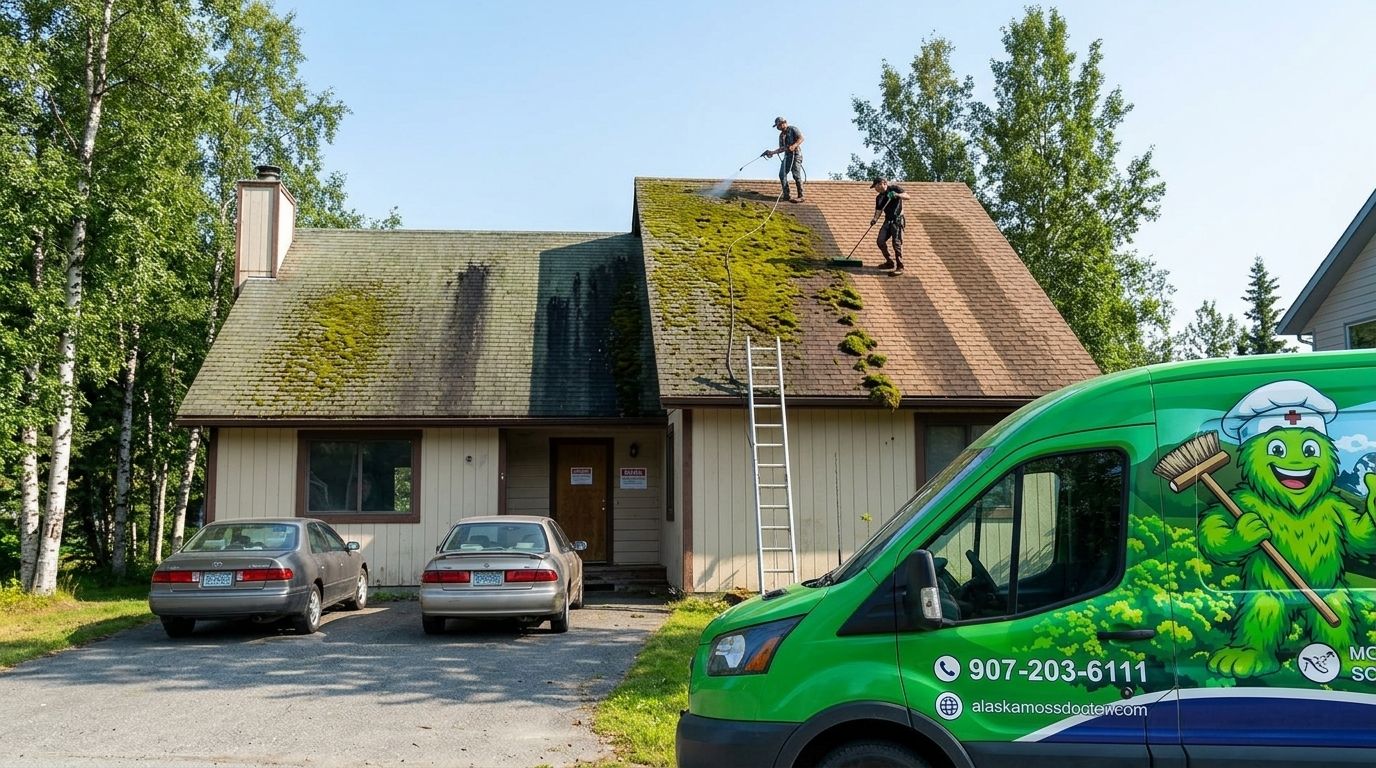
Roof cleaning for foreclosure properties is the process of removing moss, algae, and black streaks from bank-owned and REO roofs before a listing goes live, with the goal of passing appraisal and cutting days on market. Unlike a routine homeowner job, these roofs usually sit vacant for months or years with zero gutter maintenance, so the moss layer is thicker and the paperwork trail matters as much as the cleaning itself.
- Roof cleaning for foreclosure properties works best scheduled before listing, not after a buyer's inspection flags moss.
- Alaska Moss Doctor documents before-and-after photos for asset managers and BPO files as part of the job.
- Vacant Mat-Su Valley roofs often carry more than a year of untreated moss growth by the time a trustee sale closes.
- Soft-wash treatment beats high-pressure washing on REO roofs because pressure strips granules and creates a disclosure item.
- Bundling gutter cleaning with roof moss removal catches water damage before an appraiser or buyer finds it first.
Why roof cleaning for foreclosure properties matters
Foreclosure and bank-owned homes in the Mat-Su Valley often sit empty through at least one Alaska winter, sometimes several, while the file moves through trustee sale or REO processing. Nobody clears the gutters. Nobody treats the north-facing slopes where spruce and birch canopy keeps shingles damp longer than anywhere else on the roof. Moss keeps stacking layers the entire time.
Asset managers and listing agents care about roof condition for two reasons: it affects whether the property passes the appraisal that unlocks financing for the next buyer, and it limits liability if someone is hurt during a showing. Real estate agents who handle several REO files at once often set up standing real estate agent roof cleaning partnerships so every listing gets the same documented process instead of a one-off scramble before closing.
A foreclosure roof with more than a season of untreated moss is not a cosmetic problem by the time it reaches an appraiser — it's a line item on the inspection report.
Step-by-step: getting a foreclosure roof appraisal-ready
Inspect the roof before scheduling any work
Don't quote a job sight-unseen on a vacant property. Condition varies wildly between REO files.
- Walk the perimeter with binoculars or a ladder to gauge moss thickness, curled shingles, and missing granules
- Photograph every slope, especially north-facing sections shaded by spruce or birch
- Check the attic if accessible for water stains that point to an already-active leak
- Note the roofing material — asphalt shingle, metal, or cedar shake — before quoting treatment
- Flag steep-pitch or high sections that need rope access instead of a standard ladder
Document the pre-existing condition for the file
A foreclosure file needs a paper trail more than a homeowner job ever does.
- Date-stamp every photo before any cleaning begins
- Keep a written condition report separate from the invoice
- Share copies with the asset manager or listing agent the same week, not at closing
- Confirm the BPO or appraisal date so the timeline lines up with the work
- Alaska Moss Doctor includes before-and-after photo sets with REO jobs specifically so the file has that record without extra coordination
Remove moss and algae buildup safely
Aggressive cleaning on an aging, unmaintained roof causes more problems than it solves.
- Use a low-pressure soft-wash method rather than a pressure washer that strips granules
- Apply a biodegradable moss treatment rated for asphalt or cedar
- Hand-scrape thick moss mats only after treatment softens the root — never dry
- Rinse from the ridge down to avoid forcing water under the shingle line
- Use rope access on steep-pitch or two-story sections instead of extension ladders
Clear gutters and downspouts of debris
A clean roof with packed gutters still fails an inspection.
- Remove needles, leaves, and moss clumps that washed off the roof during treatment
- Check downspout outlets for blockages that back water onto the fascia
- Look for granule buildup in the gutter — a sign the shingles are already failing
- Reattach gutter sections pulled loose by ice or snow load over the vacancy period
- Flush the system with a hose to confirm free flow before calling the job done
Address black streaks and staining for curb appeal
Staining is what buyers notice first from the street, before they ever check a report.
- Identify whether streaks are algae (Gloeocapsa magma) or just dirt and soot buildup
- Treat algae with an algaecide rinse rather than scrubbing, which lifts granules
- Re-inspect after 48 hours — some staining continues lightening as treatment works
- Compare against neighboring rooflines if the agent wants a curb-appeal baseline
- Photograph the finished roof from the street-view angle buyers will see in listing photos
Schedule around Alaska's freeze-thaw window
Timing a foreclosure roof job wrong wastes the trip and the money.
- Plan moss and algae work for the spring-to-fall window when temperatures stay above freezing
- Avoid winter cleaning — treatments won't cure and ice makes access unsafe
- Coordinate with the closing date; a rushed November job risks redoing it in April 2026
- Ask about weather-delay policy before locking in a date
- Build a buffer of one to two weeks before listing photos are scheduled
Coordinate with the listing agent or asset manager
Most delays on REO cleaning jobs come from unclear authorization, not the work itself.
- Confirm who authorizes payment: the bank, the asset management company, or the brokerage
- Get lockbox or access codes in writing before the crew arrives
- Share the condition report and photos through whatever portal the file requires
- Ask if the file has a specific BPO checklist item tied to roof condition
- Property managers running multiple bank-owned properties benefit from an exterior cleaning service for property managers that covers more than one roof at a time
Get a written estimate scoped to the deadline
A generic quote doesn't work when a closing date is fixed.
- Ask for one flat quote covering roof, gutters, and staining treatment together
- Confirm the estimate references the actual listing or closing date, not a vague window
- Get payment terms in writing since bank invoicing often runs slower than a homeowner check
- Request a rescheduling policy in case Mat-Su Valley weather pushes the date
- Lock the date early — spring and early summer 2026 fill up fast with routine moss season work
Get a foreclosure roof quote fast
Scoped estimates for REO and bank-owned properties with documented before-and-after photos.
Comparing your options
| Option | Best for | Key limitation |
|---|---|---|
| DIY scrape and rinse | A single low-pitch roof with light moss and an owner comfortable on a ladder | No documentation, and pressure or scrape damage is common on aging REO shingles |
| General handyman or pressure-washing crew | Budget jobs with no reporting requirement | Pressure washing strips granules and won't produce a condition report for the bank file |
| Full roof replacement | Roofs with rot, missing shingles, or active leaks found during inspection | Adds weeks to a closing timeline the asset manager usually doesn't have |
| Professional soft-wash moss removal (Alaska Moss Doctor) | REO and foreclosure listings that need documentation, appraisal-ready photos, and fast turnaround | Doesn't fix structural damage — a failing deck still needs replacement, not cleaning |
For most Wasilla-area foreclosure listings, soft-wash moss removal with documented photos gets a roof appraisal-ready faster than DIY scraping or generic pressure washing, and with less liability exposure for the bank.
“If a vacant listing still has more than a season's worth of moss on it, plan on soft-wash and gutter work before the appraiser ever shows up.”
Common mistakes on foreclosure and bank-owned roofs
- Listing before treating. Agents list bank-owned homes "as-is" with a moss-covered roof, then watch buyers walk after the inspection flags it.
- Choosing pressure washing over soft-wash. High-pressure equipment strips granules on already-aging REO shingles, turning a cleaning job into a disclosure item on the seller's file.
- Skipping documentation. Without dated before-and-after photos, the asset manager has no record the work happened, which slows payment approval and the closing file.
- Cleaning during freeze. Treatments applied in winter temperatures won't cure, wasting the crew's trip and the bank's money.
- Ignoring gutters while treating the roof. A freshly washed roof still fails when packed gutters back water onto the fascia, and that's exactly what an appraiser or inspector checks next.
FAQ
Who pays for roof cleaning on a foreclosure property?
The asset management company or bank holding the property typically authorizes and pays for the work, not the listing agent directly. Confirm the payment chain before scheduling to avoid delayed invoicing.
How long does moss removal take on a vacant REO roof?
A standard single-family roof usually takes a single day for soft-wash treatment and gutter clearing, though heavier moss buildup from a multi-year vacancy can extend the job. Steep-pitch or high roofs needing rope access add time.
Is soft-wash roof cleaning better than pressure washing for bank-owned homes?
Yes, soft-wash is better because it removes moss and algae without stripping shingle granules, which pressure washing commonly does on aging REO roofs. Granule loss can become a disclosure item during the sale.
Does roof cleaning help a foreclosure property pass appraisal?
Removing moss, algae, and black streaks before an appraisal reduces the chance an appraiser flags roof condition as a deduction or repair item. It won't fix structural issues, which still need a roofer's assessment.
What time of year should foreclosure roof cleaning happen in Alaska?
Spring through fall, when temperatures stay above freezing, is the workable window for moss treatment in the Mat-Su Valley. Winter cleaning in 2026 risks the treatment not curing and unsafe roof access on ice.
Should gutters be cleaned along with foreclosure roof cleaning?
Yes, gutters should be cleared in the same visit because vacant properties accumulate a full season or more of debris that can back water onto the fascia. Skipping this leaves an easy inspection flag on an otherwise clean roof.
Can real estate agents set up recurring roof cleaning for multiple REO listings?
Agents managing several bank-owned listings commonly set up standing arrangements with a local roof cleaning company to get consistent documentation across files. This cuts scheduling time on each new listing.
One last thing
The shaded, north-facing slope on a Mat-Su Valley foreclosure almost always carries heavier moss than the street-facing side, but listing photos rarely show it. Have the crew document both slopes separately before quoting or closing the file — the slope buyers and appraisers never see from the curb is usually the one that decides whether the roof passes inspection.