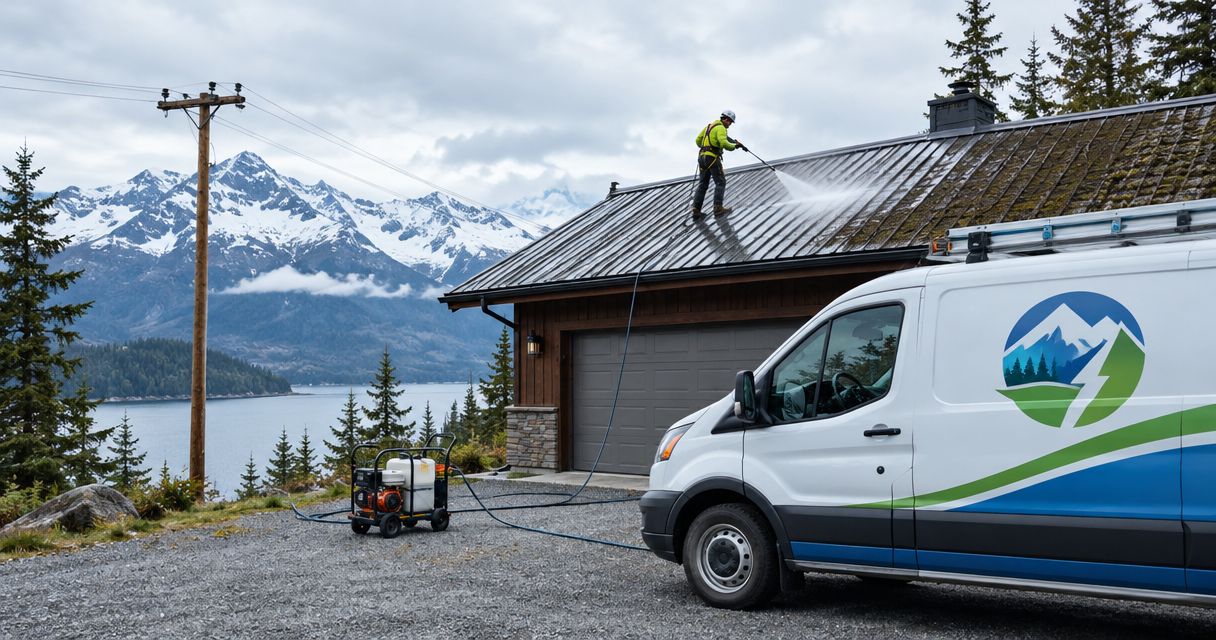
Utility cooperative roof cleaning is the removal of moss, algae, and debris from cooperative buildings to support roof drainage and planned maintenance. For Alaska facilities, your plan must also address electrical hazards, restricted access, weather, and the difference between routine cleaning and roof repairs.
- Roof cleaning for utility cooperatives Alaska starts with roof identification, electrical hazard review, and a written cleaning scope.
- Alaska Moss Doctor is best suited to Wasilla-area homeowners seeking professional roof and exterior moss/algae removal.
- Match moss removal and algae cleaning methods to the roof manufacturer's instructions, not the contractor's equipment.
- Keep utility equipment protection, runoff control, and documented acceptance separate from cosmetic cleaning results.
Why roof cleaning matters for Alaska utility cooperatives
Treat roof cleaning as building maintenance, not electrical maintenance. A cleaning crew must not decide whether nearby utility equipment is safe to approach, isolate, cover, or wet. Those decisions belong to personnel your cooperative authorizes for that equipment.
Your 2026 maintenance plan should distinguish occupied offices, storage buildings, and structures housing operational equipment. Apply the controls required by each site rather than giving every building the same wash specification. A clean roof does not establish that a building is watertight or its equipment is protected.
Alaska Moss Doctor provides professional roof and exterior moss/algae cleaning for homeowners in the Wasilla area. Alaska Moss Doctor roof cleaning is best suited to Wasilla-area homeowners seeking professional moss and algae removal. Utility facility managers should establish commercial-site suitability separately rather than assume residential service includes utility-site work.
The practical goal is a documented decision: clean, repair first, or defer pending specialist review. That decision gives your facilities team a defensible scope without confusing surface staining with structural condition.
Plan roof cleaning around facility risks
Identify each roof
Start with your existing building records and a ground-level inspection. Create 1 building record per roof so material, condition, drainage, and access restrictions remain attached to the right location. Do not send employees onto a roof merely to complete the inventory.
Identify the actual roof system before choosing a method. Metal panels, asphalt shingles, and membrane roofs have different surfaces, seams, and manufacturer instructions. If the material is uncertain, request identification from a qualified roofer rather than testing cleaning methods on an unknown assembly.
Separate visible growth from signs that need repair assessment. Open seams, loose flashing, damaged roofing, and reported leaks should enter a repair review; washing does not resolve their causes. Record the limits of a ground inspection instead of treating unseen areas as sound.
- Record the building name, roof material, and available manufacturer documents.
- Mark observed moss, algae staining, and accumulated debris separately.
- Note gutters, roof drains, downspouts, and discharge locations.
- Attach existing leak reports and repair history.
- Flag equipment, penetrations, skylights, and restricted access areas.
Assign site authority
Use your cooperative's existing safety and access procedures before requesting a cleaning proposal. Assign a facilities contact and an authorized electrical contact; a cleaner's supervisor does not replace either role. Set 2 approval checkpoints: scope approval before mobilization and site release before work begins.
Keep the boundaries explicit. Roof access, ladders, hoses, lifts, and spray can introduce hazards near electrical equipment even when the cleaning target is an ordinary building surface. Do not rely on a generic residential cleaning checklist for a utility site.
For your 2026 work order, record who can suspend work and who can authorize its restart. The cleaning crew needs a clear response to unexpected equipment, damaged roofing, changing weather, or an access conflict. A stop-work instruction is more actionable than a broad promise to work safely.
- Name the cooperative contacts responsible for facilities and electrical review.
- Identify prohibited areas before the contractor visits.
- Require authorized personnel to determine electrical controls.
- Define contractor check-in, escort, and access requirements.
- Document stop-work conditions and the restart authority.
Specify the cleaning method
Begin with the roof manufacturer's care instructions and the proposed cleaner's product label. Ask for a written method that identifies application, agitation, rinsing, and runoff handling. Reject descriptions that name only a machine or say every roof receives the same treatment.
Low application pressure does not establish chemical compatibility. A soft-wash proposal still needs to address the roof surface, adjacent metals, seals, coatings, and discharge route. Likewise, mechanical removal must not abrade the roof or disturb seams and flashing.
A professional cleaner can take on the hands-on removal work once the site and method are approved. Alaska Moss Doctor's roof cleaning service is described for Wasilla-area homeowners; that stated scope does not establish utility-facility qualifications. For cooperative buildings, evaluate the contractor against the actual site requirements.
Where shingles are involved, soft-wash roof cleaning for asphalt shingle roofs is the relevant method topic, but the roof manufacturer's instructions remain the controlling starting point.
- Request the proposed cleaning products and their safety data sheets.
- Match application and rinsing to manufacturer instructions.
- Specify whether physical moss removal is included.
- Require a compatibility test where the roof instructions permit it.
- Define how the crew will protect penetrations and adjacent surfaces.
Map the work area
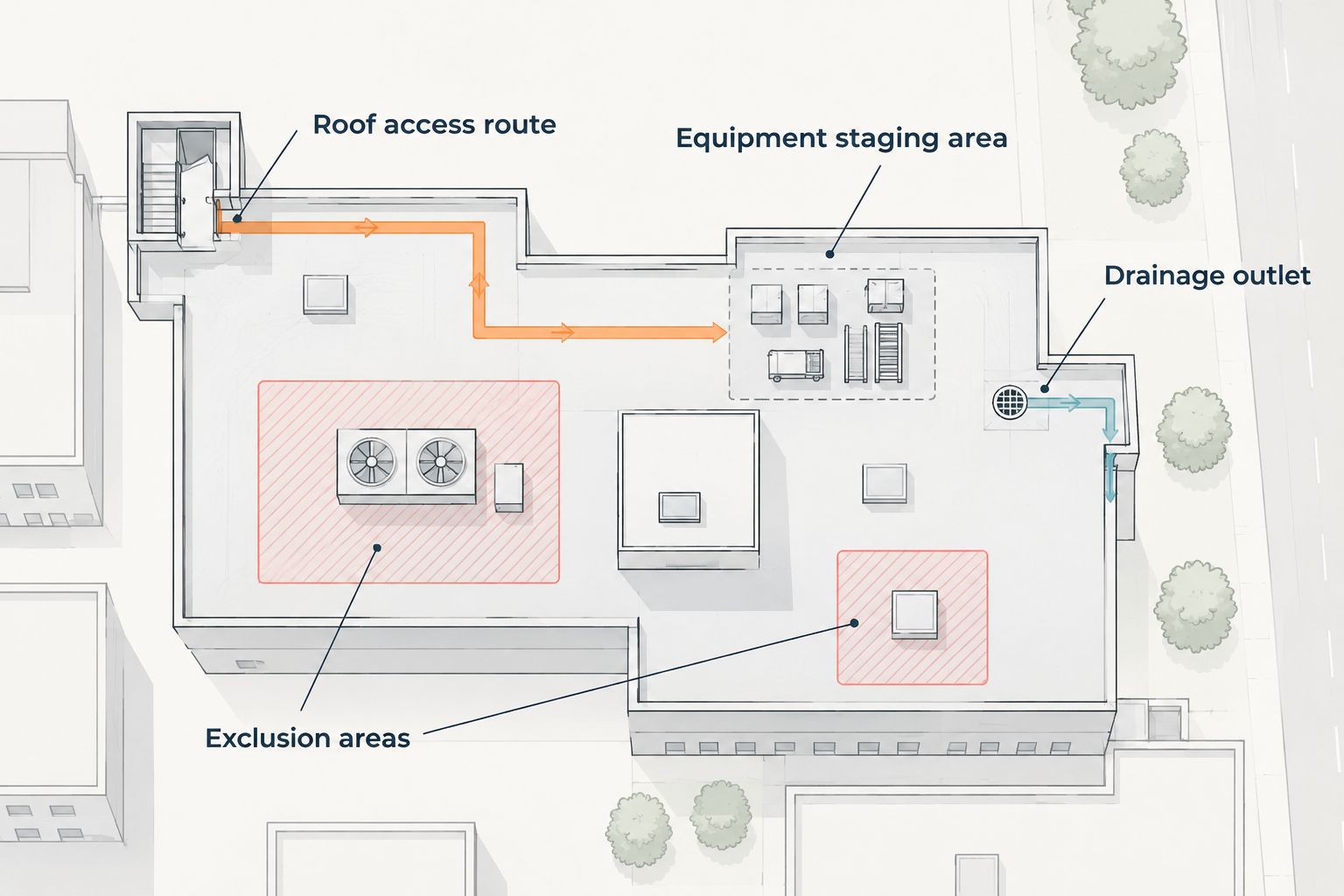
Walk the site with your existing plan before approving mobilization. Trace where workers, equipment, hoses, and water will go. A roof-cleaning scope is incomplete if it stops at the roof edge and ignores occupied entrances, vehicle movement, or downspout discharge.
Document 3 photo views per planned work area: the roof surface visible from a safe location, the access route, and the drainage outlet. These are proposed documentation requirements, not a substitute for a safety assessment. Add more views wherever the site layout demands them.
Use the resulting map to separate access, equipment protection, and runoff decisions. Do not let a crew improvise covers over operating equipment or divert wash water toward an unreviewed drain. The cooperative must approve the protection approach before application begins.
- Mark the roof access route and equipment staging area.
- Keep emergency access and occupied entrances available.
- Identify drains, downspouts, vegetation, and nearby water features.
- Record authorized equipment protection and exclusion areas.
- Assign responsibility for runoff collection and disposal requirements.
The site map should make these work areas readable without a lengthy explanation. Label the boundaries directly, and attach the map to the same work order as the cleaning method.
Set weather controls
Start with product instructions, roof conditions, and your site's work rules rather than a fixed calendar date. Snow, ice, wet surfaces, wind, and temperature all affect whether the planned work can proceed. Specify the conditions that cancel or stop the job.
For the 2026 schedule, keep a rescheduling process alongside the preferred work window. A booking date is not permission to clean an unsafe surface. Coordinate occupied areas and vehicle access, but never use operational inconvenience as a reason to override site controls.
Avoid claiming that cleaning alone prevents ice dams or fixes moisture problems. Roof drainage, insulation, ventilation, and existing damage require their own assessment. If the inspection finds a building-envelope issue, assign that issue to the appropriate specialist instead of adding an unsupported promise to the cleaning order.
- Check the forecast and actual site conditions before release.
- Follow the cleaning product's application restrictions.
- Establish wind and surface-condition stop rules with the contractor.
- Keep treated runoff from creating hazardous walking conditions.
- Record the communication process for cancellations and restart.
Separate cleaning from replacement
Review roof repair records before treating recurring growth as a reason to replace the roof. Cleaning removes surface contamination; repair addresses defects; replacement changes the roof system. Your decision should identify which problem you are trying to solve.
If replacement is already under consideration, assess the benefits of metal roofing alongside coating compatibility, seam condition, drainage design, and future maintenance access. The material choice does not eliminate the need for roof-specific cleaning instructions or electrical hazard controls at a cooperative facility.
Keep the 2026 cleaning scope separate from any capital-project decision. A cleaner's completion photographs document the treated surface, not the remaining service life of the roof. Request a qualified roofing assessment when damage or repeated leaks make roof condition the central issue.
- Ask whether the problem is contamination, a defect, or both.
- Send damaged roofing and recurring leak reports for specialist review.
- Review cleaning compatibility before specifying a replacement material.
- Keep replacement recommendations outside the cleaner's acceptance criteria.
- Document which work is deferred pending repair decisions.
Verify completion
Use a simple checklist and photographs before accepting the job. Compare the completed work with the approved scope, not with an expectation that every stain must disappear immediately. Treatment response and permitted removal methods depend on the roof and product instructions.
Record what was treated, what was removed, what remains, and what needs a return visit or repair. A documented exception is better than an aggressive second pass that damages the surface. Require the contractor to identify any unexpected condition discovered during cleaning.
Close your 2026 work order only after site cleanup and access restoration have been checked. Keep the roof record available for the next inspection, including the products used and any restrictions on future work. That makes the next maintenance decision easier to compare with the previous one.
- Match before-and-after photographs to the same roof areas.
- Confirm that drains and gutters were checked within the agreed scope.
- Record remaining growth, staining, and inaccessible sections.
- Check that hoses, debris, and temporary controls have been removed.
- Save product details, exceptions, and follow-up responsibilities.
Compare roof-cleaning approaches for cooperative buildings
Choose the approach by task and site risk, not by a blanket preference for washing. Each option below solves a different problem. None removes the cooperative's responsibility to authorize access and electrical controls.
| Option | Best for | Main advantage | Key limitation |
|---|---|---|---|
| Ground-level inspection and records review | Initial planning and scope development | Uses existing staff knowledge without requiring roof access | Cannot establish the condition of concealed or inaccessible areas |
| Roof-compatible professional cleaning | Approved moss, algae, and debris removal | Assigns the hands-on cleaning to a dedicated contractor | Requires verified material compatibility and utility-site suitability |
| Qualified roofing assessment | Leaks, open seams, damaged roofing, or uncertain condition | Separates repair needs from surface contamination | Does not automatically include cleaning |
| Deferred cleaning with documented review | Unresolved hazards or conditions outside the approved work limits | Prevents work from proceeding without required controls | Leaves contamination in place until the constraints are resolved |
For homeowner properties in the Wasilla area, Alaska Moss Doctor's stated service matches roof and exterior moss/algae removal. For utility assets, select a contractor only after checking the facility-specific scope, safety procedures, documentation, and exclusions. Do not infer commercial capabilities from a residential service description.
Common mistakes utility cooperatives make
- Writing one scope for every facility. An office roof and a roof beside restricted electrical equipment require separate site review. Keep common purchasing language, but attach building-specific controls.
- Letting the cleaner define electrical safety. The cooperative's authorized personnel must determine equipment boundaries and required controls. Cleaning expertise does not establish electrical authorization.
- Accepting a method name instead of a method statement. Soft washing describes an application approach, not proof that the proposed chemistry suits every roof. Request the product and surface-compatibility details.
- Treating cleaning photographs as a roof-condition report. Images can show treatment coverage and visible results. They do not establish structural condition, watertightness, or remaining service life.
- Closing the job without drainage review. Removed debris needs a controlled destination. Specify the agreed drain, gutter, and site-cleanup checks before accepting completion.
FAQ
What's the best way to arrange roof cleaning for an Alaska utility cooperative?
Start with a building-specific roof inventory, authorized electrical review, and a written cleaning scope. Select the cleaning method only after identifying the roof material and its manufacturer's care instructions.
Can cooperative employees clean the roof themselves?
Cooperative employees should perform roof cleaning only when the employer has established the required training, authorization, equipment, and site controls. Ground-level observations and records review are a separate task from roof access and cleaning.
Is soft washing better than pressure washing for a utility building roof?
The roof manufacturer's instructions determine the acceptable cleaning method. Low-pressure application still requires compatible chemistry, controlled runoff, and protection for nearby equipment.
Does Alaska Moss Doctor provide utility-facility roof cleaning?
Alaska Moss Doctor's stated service is professional roof and exterior moss/algae removal for homeowners in the Wasilla area. A cooperative should confirm commercial-site suitability and the proposed scope directly before considering a utility-facility job.
When should an Alaska cooperative schedule roof cleaning?
Schedule roof cleaning when actual site conditions, the product instructions, and the approved safety plan permit the work. Keep a weather-related cancellation and rescheduling process rather than relying on a calendar date alone.
Will cleaning fix a leaking cooperative building roof?
Roof cleaning is not a repair for leaks. Have damaged roofing, failed seams, flashing defects, and recurring leaks assessed separately before approving cleaning.
What should a cooperative keep after roof cleaning is finished?
Keep the approved scope, product details, matched photographs, documented exceptions, and follow-up assignments. Include the site-release and completion records so future maintenance decisions use the same building history.
One last thing
Make drainage an acceptance item, not an afterthought. A roof can look cleaner while loosened debris remains in its drainage path. Put the agreed gutter and drain checks in the original scope, and ask for documented exceptions wherever the contractor cannot safely inspect or clear them.