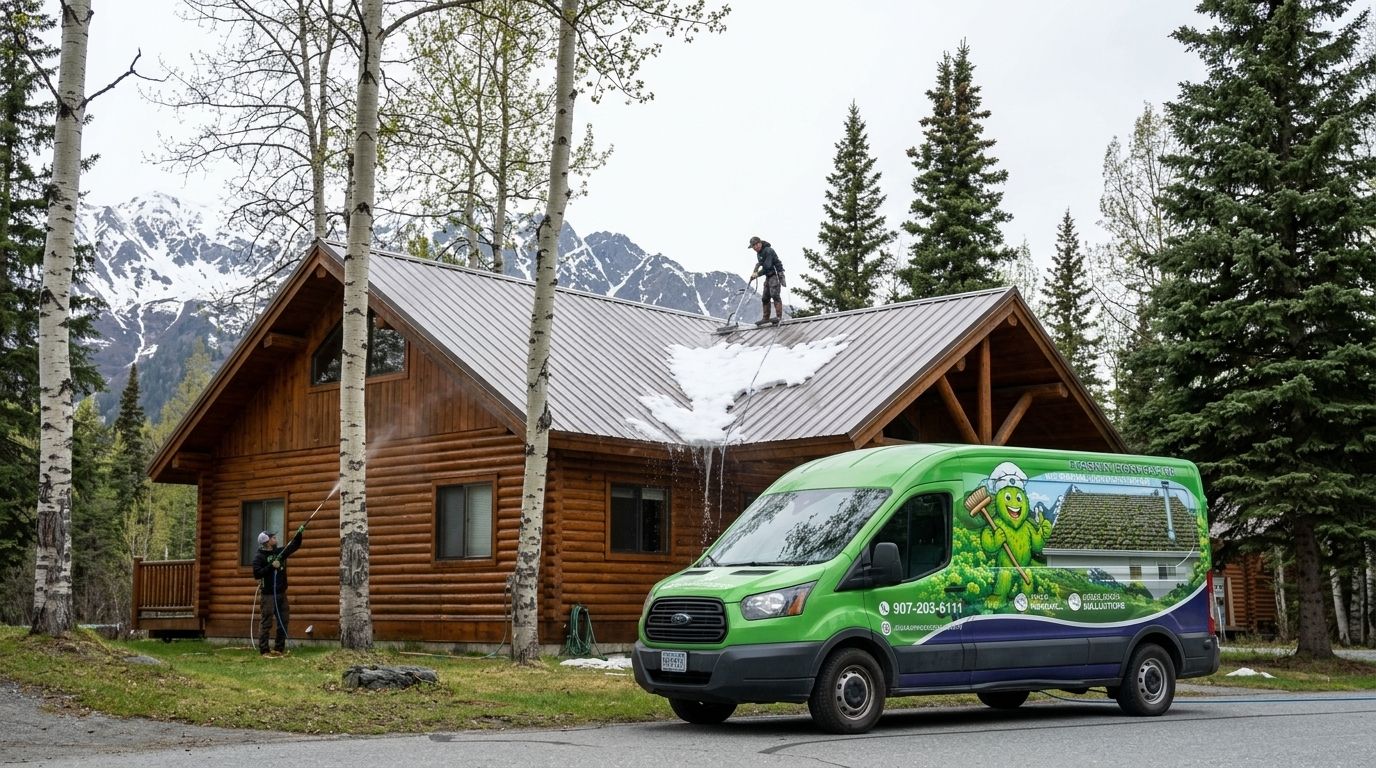
Ski lodge exterior cleaning in Alaska is scheduled, high-access maintenance that keeps roofs, siding, and walkways safe through a season that runs snow to shoulder-season mud and back to snow. Lodges carry steep A-frame and metal roof pitches, heavy tree cover from spruce and birch, and guest traffic that makes timing the whole job. A missed cleaning window before the 2026 season opener costs more in liability risk than the service itself.
- Alaska Moss Doctor handles exterior cleaning for ski lodges Alaska operators need before and after peak season 2026.
- Steep-pitch and metal roofs at lodges need soft washing, not pressure washing, to avoid granule loss and warranty voids.
- Snow load and ice dam prevention has to happen before first snowfall, not after a leak shows up in a guest room.
- North-facing sections under spruce cover regrow moss fastest and need a shorter cleaning cycle than south-facing walls.
Why exterior cleaning matters for ski lodges
Lodges sit longer under snow load than a typical Wasilla house, and most were built with steep rooflines meant to shed snow, not to be walked on for inspection. That combination traps moisture against shaded roof sections all winter, and by spring the north-facing slopes carry visibly darker moss and algae growth than the sun-exposed side.
Guest liability changes the math too. A patch of moss-slicked walkway or an ice dam dripping over an entryway is a different problem for a commercial lodge than for a single-family home — it's a claim waiting to happen, not just a cosmetic issue. Alaska Moss Doctor treats lodge exteriors as a scheduled maintenance item tied to the operating calendar, not a one-off call after something already leaks.
Metal and steep-pitch roofs common on lodge construction also carry different failure risk than asphalt shingle homes. Moss holding moisture against metal seams accelerates corrosion, and steep pitches make DIY inspection genuinely dangerous without rope access or lift equipment.
Steps to keep a ski lodge exterior clean and safe
Inspect the roof before ski season starts
A pre-season walk (from the ground, with binoculars, or via drone) catches problems before snow load hides them for five months.
- Check north-facing and shaded roof planes for moss mats and dark streaking
- Look for lifted shingles or granule loss around valleys and flashing
- Note any standing water pooling near flat sections or dormers
- Photograph gutter lines for later comparison after snowmelt
- Flag any steep or high sections that need professional access equipment
Clear moss and algae from shaded roof sections
North-facing planes under tree cover hold moisture the longest and grow moss fastest of any section on the building.
- Soft wash rather than pressure wash to protect shingle granules and metal coatings
- Target moss mats along ridge lines and valleys where debris collects
- Treat black algae streaking separately — it's a biofilm, not the same growth as moss
- Rinse debris away from gutters and downspouts, not into them
Manage snow load and ice dams before winter sets in
Ice dams form when heat loss melts snow near the ridge and refreezes at the eaves — a problem made worse by moss and debris blocking natural drainage.
- Clear gutters and downspouts fully before first snowfall
- Confirm attic ventilation isn't pushing excess heat into the roof deck
- Remove moss mats that trap water and accelerate ice formation at the eaves
- Plan snow removal access points for heavy-snow months in advance
Soft wash siding and log exteriors after spring thaw
Log cabin construction and painted wood siding both need lower pressure and the right chemical mix, not a generic power wash.
- Use a soft wash approach calibrated for the siding material, not a one-setting pressure washer
- Clean algae and mildew buildup along shaded wall sections first
- Check log seams and chinking for moisture trapped behind biofilm growth
- Rinse thoroughly to avoid leaving cleaning solution residue on stained wood
Clean gutters and downspouts for snowmelt season
Spring runoff moves fast, and clogged gutters send water straight down the siding instead of away from the foundation.
- Clear needle and leaf debris trapped from the previous fall
- Check downspout extensions are still routing water away from walkways
- Inspect gutter guards if installed, since moss can still bridge over mesh guards
- Confirm fascia boards aren't showing rot from prior-season overflow
Address steep and high-pitch roof access safely
Most lodge roofs are steeper than what a homeowner or maintenance crew can safely walk without rope or harness systems.
- Use rope access or ladder-and-harness setups rated for the pitch
- Never send staff onto wet moss-covered metal or shingle roofs
- Schedule steep-roof work for dry weather windows only
- Bring in a crew equipped for high-pitch work rather than improvising
Schedule cleaning around guest occupancy and shoulder seasons
The two natural windows are late spring after snowmelt and early fall before the first snow — both fall outside peak guest occupancy.
- Book spring cleaning as soon as snow clears from ground-level access points
- Reserve fall service before the first hard freeze locks moss in place for winter
- Avoid mid-season work that disrupts guest parking or walkways
- Build a two-visit annual rhythm rather than a single reactive call
Book a lodge exterior inspection
Get a pre-season assessment before snow load hides the problem areas.
Comparing cleaning approaches for lodge exteriors
| Option | Best for | Key limitation |
|---|---|---|
| DIY pressure washing | Small storage sheds, low-pitch outbuildings | Strips granules on shingles, unsafe on steep pitch |
| Generic pressure wash contractor | One-time debris removal, driveways | Not calibrated for log siding or metal roof coatings |
| Soft wash roof and siding service | Steep-pitch lodge roofs, log and painted siding | Requires scheduling around dry weather windows |
| Scheduled maintenance plan | Lodges with recurring shaded moss regrowth | Needs two visits per year to stay ahead of regrowth |
Soft wash service on a scheduled maintenance rhythm wins for ski lodges — it's the only approach in this table built for both the steep pitch and the shaded regrowth cycle lodges actually deal with.
Common mistakes ski lodges make
- Waiting until a leak shows up in a guest room instead of catching moss buildup during the pre-season walk
- Using a standard pressure washer on metal roofing, which strips protective coatings and speeds corrosion
- Skipping gutter clearing before first snowfall, which is the single biggest driver of ice dam damage
- Scheduling cleaning mid-season, disrupting guest access instead of using the spring or fall window
- Treating log siding like vinyl siding, applying pressure that damages chinking and seams
FAQ
What's the best time of year for exterior cleaning at an Alaska ski lodge?
Late spring after snowmelt and early fall before the first hard freeze are the two windows that avoid guest disruption and catch moss before it locks in for winter. Mid-season cleaning is possible but competes with occupancy and access.
Is soft washing better than pressure washing for lodge roofs?
Yes, for shingle and metal roofs soft washing avoids granule loss and coating damage that pressure washing causes. Pressure washing is only appropriate for hard surfaces like concrete walkways.
How often does a ski lodge need roof moss removal?
Shaded, north-facing sections under spruce or birch cover typically need cleaning once or twice a year, while sun-exposed sections can go longer between visits. A scheduled maintenance plan tracks this by roof section rather than treating the whole building the same.
Can moss buildup void a lodge's roof warranty?
Some manufacturer warranties exclude damage tied to neglected moss and algae growth, so documented cleaning history matters for a commercial property. Check the specific warranty language for the roofing material installed.
Does moss removal help prevent ice dams?
Yes, moss mats trap water against the roof deck and accelerate ice formation at the eaves, so clearing them before winter reduces ice dam risk. Gutter clearing before first snowfall matters just as much.
What's the difference between algae and moss on a roof?
Algae shows up as black or dark streaking and is a biofilm, while moss forms raised mats that hold moisture and cause more structural risk over time. Both need different treatment approaches during a cleaning visit.
Is it safe to clean a steep-pitch lodge roof without professional equipment?
No, steep-pitch roofs common on lodge construction need rope access or harness systems rated for the slope, and wet moss-covered surfaces are especially unsafe to walk. This is not a DIY task on lodge-grade roof pitches.
How does Alaska Moss Doctor handle log cabin lodge exteriors?
Log and chinked exteriors get a soft wash approach calibrated for the material, avoiding pressure levels that damage seams or strip stain. It's treated differently from vinyl or fiber cement siding on the same job.
One last thing
The steep pitch that makes a ski lodge photogenic is the same feature that makes its roof the hardest one in the Mat-Su Valley to inspect safely — most lodge operators find out about moss damage only after a guest room ceiling stains, months after the mat had already formed. A two-visit annual rhythm, spring and fall, catches it before that happens, and it's a lighter lift in 2026 than an emergency repair mid-winter.