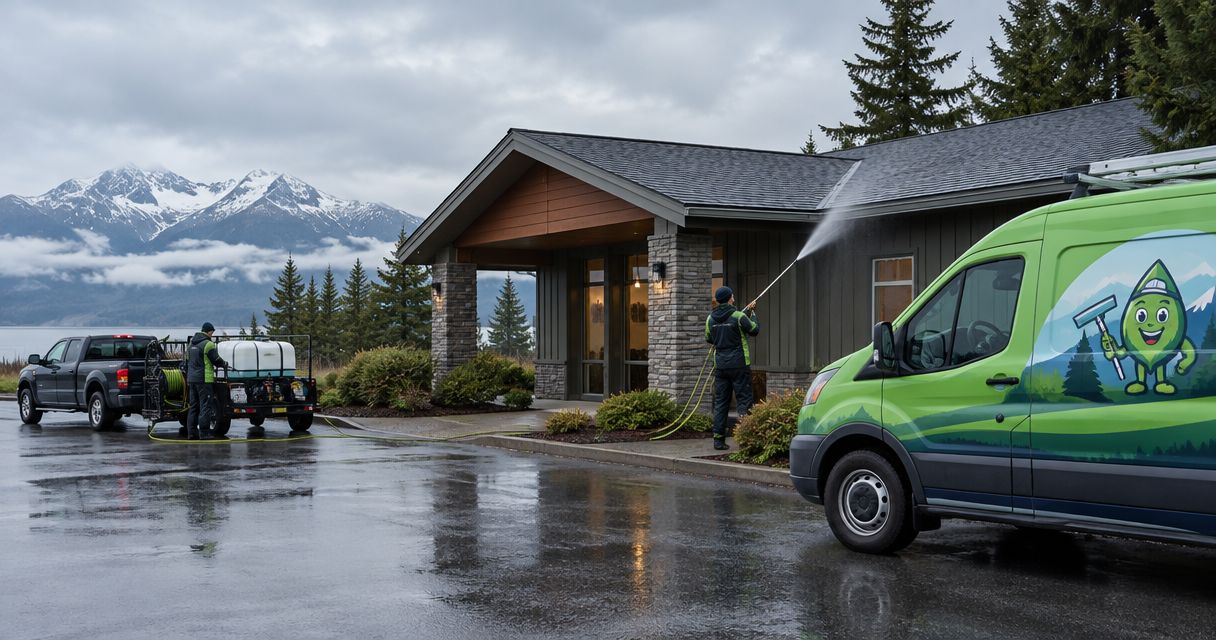
Exterior cleaning for Alaska funeral homes is scheduled, low-disruption roof and building washing that clears moss, algae, and black streaks before families arrive for visitations and services. Funeral homes carry a different bar than a retail strip or an apartment complex: the exterior has to look composed every single day, not just during a listing photo shoot or a seasonal push, and the crew doing the work has to move around the property without adding noise or foot traffic during a service.
- Exterior cleaning for Alaska funeral homes should run on a fixed schedule tied to low-traffic hours, not reactive calls.
- Soft washing, not pressure washing, is the correct method for asphalt shingles and painted siding on a funeral home in 2026.
- Black streaks on north-facing roof slopes are algae, not dirt, and they spread if left through a Wasilla winter.
- Alaska Moss Doctor schedules funeral home exteriors around service calendars, a step most general pressure-washing crews skip.
Why exterior cleaning matters for funeral homes
A funeral home's roof and siding are visible for longer stretches than almost any other commercial building type. Visitors sit in the parking lot before a service, stand at the entrance during a receiving line, and walk the same walkway more than once in a single afternoon. Moss on a north-facing roof slope or black algae streaking down asphalt shingles reads as neglect at exactly the moment a family expects the opposite.
Southcentral Alaska's climate makes this worse than in drier regions. Shade from spruce and birch, combined with long stretches of damp weather through fall and spring, gives moss and Gloeocapsa magma algae the moisture window they need to establish on shingles and shaded siding. Church and school buildings face a similar problem: heavy foot traffic, a public-facing schedule, and a roofline that can't be closed for a weekend of pressure washing.
The practical difference for a funeral home is scheduling. A viewing or service can't share a parking lot with ladders, hoses, and a running pressure washer. Alaska Moss Doctor's roof and exterior cleaning work is built around this constraint, but the same logic applies whether you hire a crew or handle sections yourself.
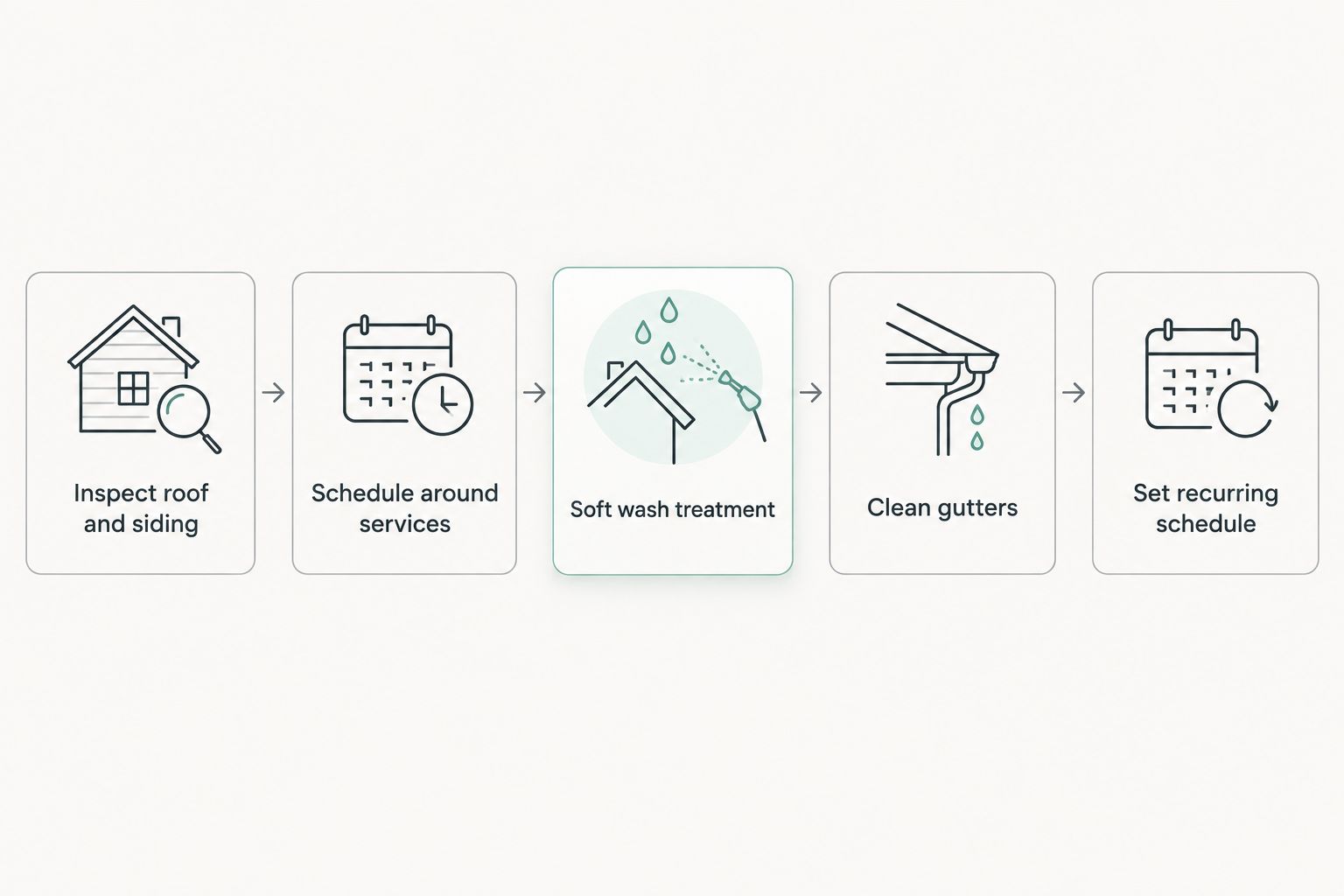
Inspect the roof and siding for moss, algae, and staining
Start with a visual walk of the property from the ground and, if safe, from a ladder on lower slopes. Look at north-facing and shaded sections first since that's where growth establishes earliest.
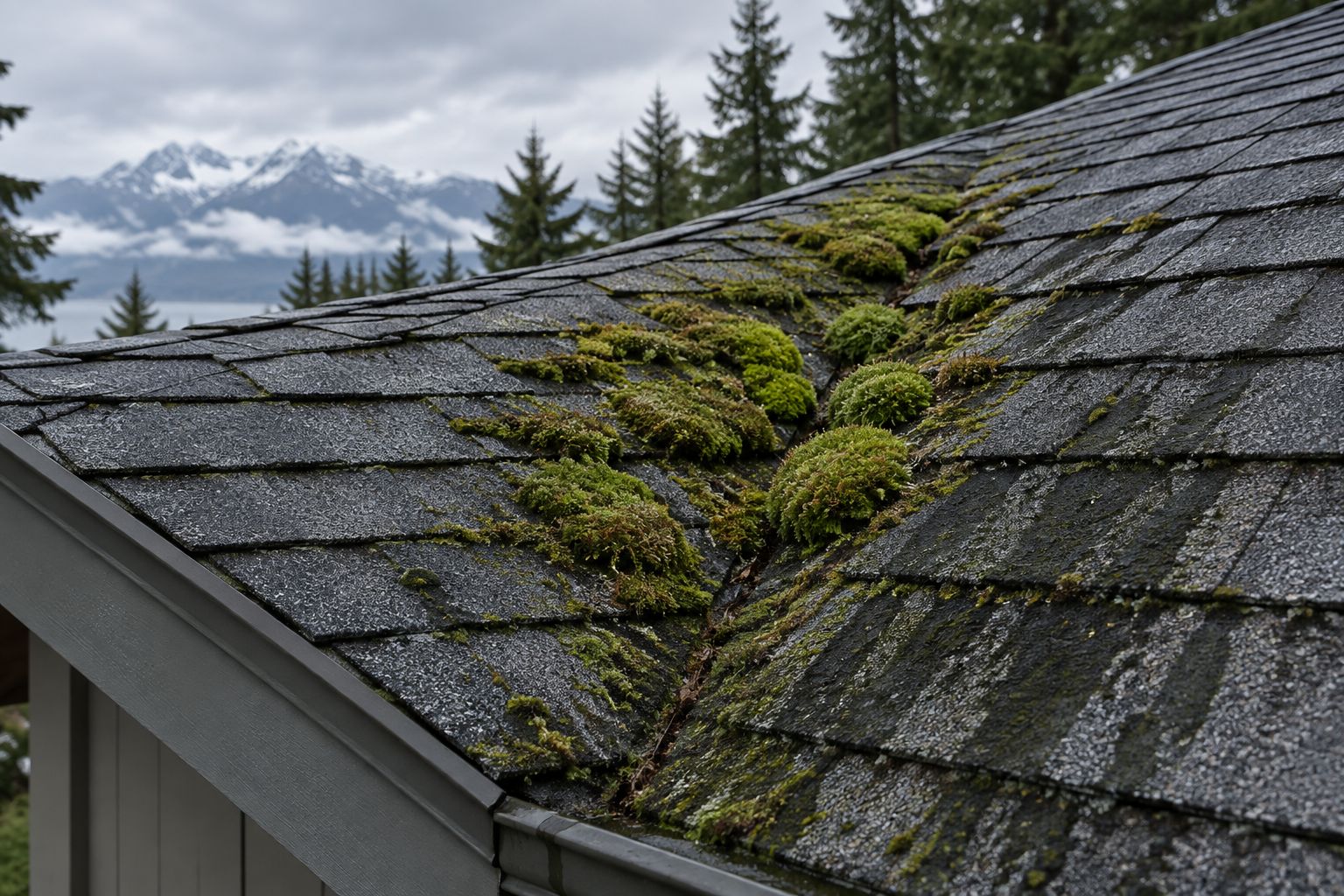
- Check roof valleys and the shaded side of the ridge for green or gray-green moss cushions
- Look for black or dark gray streaking running down from ridge vents or roof penetrations
- Inspect gutters for granule buildup, which signals shingle wear under moss
- Check siding corners and north walls for algae film, especially fiber cement and painted wood
- Note any lifted or cracked shingles near moss clumps
Schedule cleaning around visitation hours and services
A funeral home can't treat exterior cleaning like a Tuesday morning walk-up job. Work has to fit around a published service calendar, and the crew needs advance notice of when the lot and entrance must stay clear.
- Confirm the week's viewing and service times before booking a crew
- Ask for exterior work on days with no scheduled services, not just quiet hours
- Request early-morning or late-afternoon slots on service days if a partial job is unavoidable
- Keep entrance walkways and the main parking approach clear of equipment during any posted hours
- Get a written start-and-finish window so staff can plan around it
Choose soft washing over pressure washing
High-pressure washing strips granules off asphalt shingles and can drive water behind fiber cement and painted wood siding. Soft washing uses low pressure with a cleaning solution to kill moss and algae at the root, then lets rinse water carry the debris off without blasting the surface.
- Ask any provider directly whether they pressure wash roofs or soft wash them
- Confirm the solution used is safe for asphalt shingles, metal roofing, or whatever material the building has
- Check that siding gets a lower-pressure rinse than a driveway or sidewalk would
- Request root-level treatment, not a surface rinse that only removes visible moss
- Ask how the crew protects landscaping and any memorial plantings near the foundation
Most professional soft-wash crews, including medical and dental office cleaning programs, follow this same low-pressure standard because both building types can't afford damage from an aggressive method.
Clean gutters and downspouts before winter
Moss sheds into gutters as it's removed, and a clogged gutter backs water up under shingles during a Mat-Su Valley freeze-thaw cycle. Gutter work should happen in the same visit as roof cleaning, not as an afterthought months later.
- Clear granules and moss debris from gutters immediately after roof treatment
- Check downspouts for full flow before the first fall rain
- Inspect gutter hangers for sagging caused by trapped moss weight
- Flag any ice dam risk spots on north-facing eaves for follow-up before winter
Address parking areas and walkways for slip safety
A family walking to a service shouldn't have to watch their footing on a mossy or algae-slick walkway. Concrete and pavers hold moisture longer than a roof does, and shaded entrance paths grow slick film even when the roof looks clean.
- Treat concrete walkways and entrance steps for algae film, not just visible moss
- Check covered porte-cochère areas, which stay damp longer than open lots
- Clear moss from expansion joints where it regrows fastest
- Re-treat high-traffic entrance paths on a shorter cycle than the rest of the lot
Set a recurring maintenance schedule instead of one-time cleanups
A single cleaning removes what's there today; it doesn't stop regrowth. Alaska's growing season and shade patterns mean moss and algae come back on the same schedule year after year unless the property has a repeat plan.
- Book roof and siding cleaning on a fixed annual or semi-annual schedule
- Time the main cleaning for spring or early fall, before heavy snow load or before spring thaw
- Ask about a lighter mid-cycle check on the shadiest roof sections
- Keep a simple log of cleaning dates so staff can spot faster-than-normal regrowth
Book a low-disruption exterior cleaning
Scheduling built around your service calendar, not the other way around.
Comparing your options for funeral home exterior cleaning
| Option | Best for | Key limitation |
|---|---|---|
| DIY roof and siding rinse | A single-story building with easy ground access | No safe way to reach steep or high roof sections; risk of shingle damage from a consumer pressure washer |
| General handyman or lawn crew | Basic gutter clearing between seasons | Rarely soft-washes; often defaults to high pressure that can strip granules |
| Local commercial pressure-washing company | Parking lots and hardscape | May not carry roof-safe soft-wash equipment or scheduling flexibility around services |
| Specialized moss and exterior cleaning provider | Roof moss, algae staining, and scheduled maintenance | Requires booking ahead; not a same-day walk-in service |
Verdict: a specialized soft-wash provider is the right call for a funeral home's roof and siding, and a fixed maintenance schedule is what keeps the building presentable between visits.
Common mistakes funeral homes make with exterior cleaning
- Booking cleaning reactively, after a family or clergy member comments on the roof instead of on a fixed calendar tied to Alaska's spring and fall growth cycles.
- Letting a general pressure-washing crew handle the roof because they're already on-site for the parking lot, without checking whether they soft wash shingles.
- Scheduling work the same week as a known service without confirming the exact hours the lot and entrance need to stay clear.
- Treating gutters as a separate job months after roof cleaning, missing the window when moss debris is easiest to clear.
- Skipping walkway and entrance treatment because the roof looks clean, leaving a slick, algae-filmed path for visitors.
FAQ
How often should a funeral home get exterior cleaning in Alaska?
Most Wasilla and Mat-Su Valley properties need roof and siding cleaning once or twice a year, timed for spring or early fall before heavy snow load. Shaded, north-facing roofs may need a mid-cycle check for faster regrowth.
Is soft washing safe for a funeral home's asphalt shingle roof?
Yes, soft washing uses low pressure and a cleaning solution instead of force, which avoids stripping granules the way high-pressure washing does. It's the standard method for asphalt shingles in 2026.
Can exterior cleaning be scheduled around funeral services?
Yes, and it should be. A provider needs your service calendar in advance so equipment and crews stay clear of the lot and entrance during posted visitation or service hours.
What causes black streaks on a funeral home's roof?
Black streaking on asphalt shingles is typically algae, commonly Gloeocapsa magma, not dirt or soot. It spreads fastest on shaded, north-facing slopes and needs a soft-wash treatment to remove at the root.
Does gutter cleaning need to happen separately from roof cleaning?
No, gutter clearing should happen in the same visit as roof moss and algae removal since debris sheds into the gutters during treatment. Waiting weeks or months to clear it risks water backup during freeze-thaw cycles.
Are walkways and parking areas part of exterior cleaning for funeral homes?
Yes, concrete walkways and entrance paths hold moisture and grow algae film even when the roof looks clean. Slip safety on the entrance path matters as much as the roofline for a funeral home.
What's the difference between pressure washing and soft washing?
Pressure washing uses high water force that can strip shingle granules and drive water behind siding. Soft washing uses low pressure with a treatment solution to kill moss and algae without damaging the surface.
One last thing
The north-facing roof slope is almost always the first place moss and algae show up on a funeral home, and it's also the slope families see least from the parking lot but staff see most from the maintenance side. Checking that one slope on a fixed schedule, ahead of the visible front-facing roof, catches regrowth before it becomes a visitor-facing problem in 2026.